
While many birds captivate with their bold colors, the Lesser Goldfinch stands out in a more subtle yet equally fascinating way. This guide explores the characteristics of these small birds and offers tips on attracting them to your yard.
You might wonder why they’re called “lesser.” According to Emma Greig, project leader of the Cornell Lab of Ornithology’s Project FeederWatch, the name refers to their smaller size compared to the American Goldfinch, not their appearance or status.
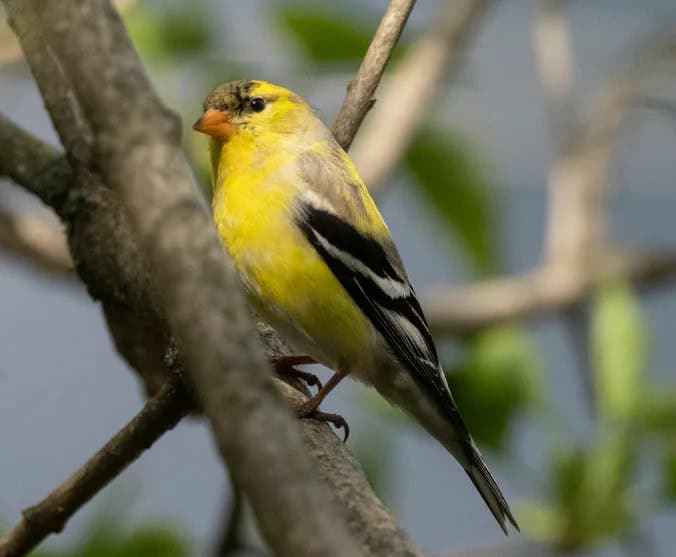
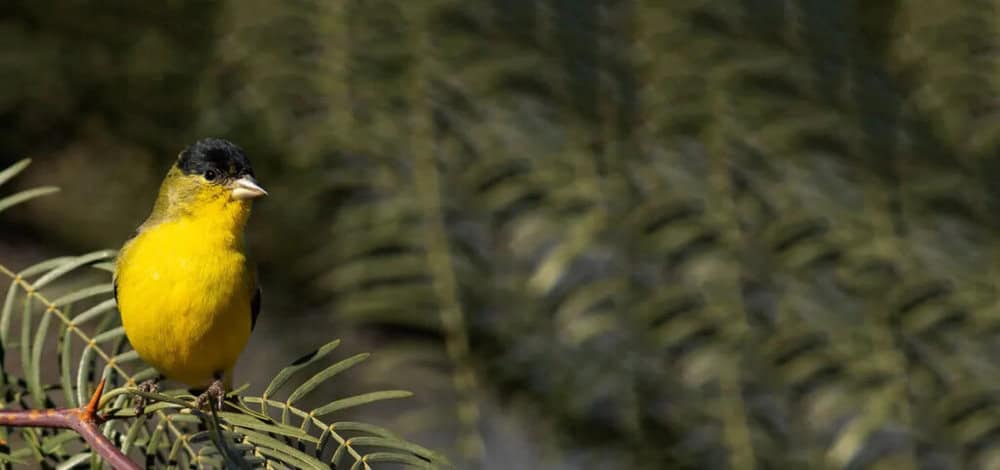
The Lesser Goldfinch (Spinus psaltria) is known for its soft brown plumage, short notched tails, and cone-shaped bills. They weigh about one-third of an ounce and measure around 4 inches in length, making them one of the smaller songbirds.
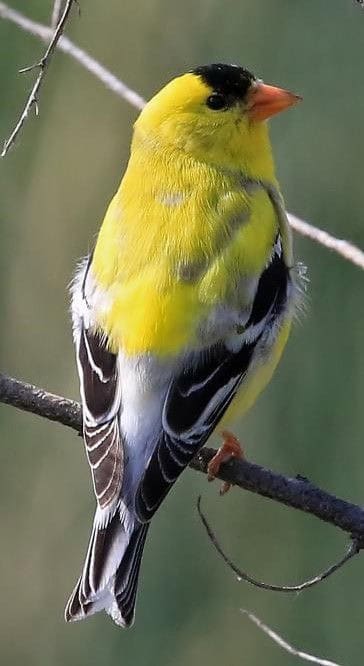
Males have a bright yellow belly and black cap, with their backs ranging from black in the eastern parts of their range to green in the western areas. Females have a more muted olive color above with yellow underneath, and both males and females feature a distinct white patch on their wings.
Their flight pattern is also distinctive. Emma explains that Lesser Goldfinches have an undulating flight, flapping their wings to gain height before gliding slightly downward. This efficient movement makes them easy to spot in the sky.
As spring approaches, you may hear their soft twittering calls as they begin courting. Pairs of Lesser Goldfinches communicate through chirping and build nests in trees like scrub oaks, willows, or cottonwoods. Males often feed the females during courtship and throughout the incubation period.
To attract these birds to your yard, try offering Nyjer or black oil sunflower seeds, and consider planting thistle. Lesser Goldfinches are among the few species that feed seeds, like thistle, to their nestlings.
While most commonly found in the southwestern United States from California to Texas, Lesser Goldfinches also inhabit parts of Washington and Wyoming during the summer.
Their range extends south into Mexico, Central America, and parts of South America. Despite habitat changes, these adaptable birds have flourished over the past 50 years, often thriving in human-altered spaces like backyards and open fields.
Though they may not boast bright colors, Lesser Goldfinches are vital to their ecosystems. Their quiet beauty and role in nature remind us of the importance of appreciating even the smallest and most unassuming creatures in our world.
Read More Birds