
If you find yourself high in the Himalayas without any distress, you’re likely either an elite climber or a bar-headed goose. Known scientifically as Anser indicus, this bird is one of nature’s most extraordinary high-altitude travelers.
Each year, the bar-headed goose embarks on a demanding migration, crossing some of the world’s tallest peaks, including those reaching over 7,000 meters, as it heads toward wintering grounds in places like Burma.

What makes this journey so remarkable is the bird’s ability to quickly adapt to drastic altitude changes—a feat unmatched by other animals.
Exceptional Adaptations for an Extreme Journey
Bar-headed geese undertake annual migrations from Central Asia to winter in Burma, Assam (India), and Pakistan’s marshlands. This journey requires them to cross Himalayan peaks, where oxygen levels are severely reduced and temperatures plummet.
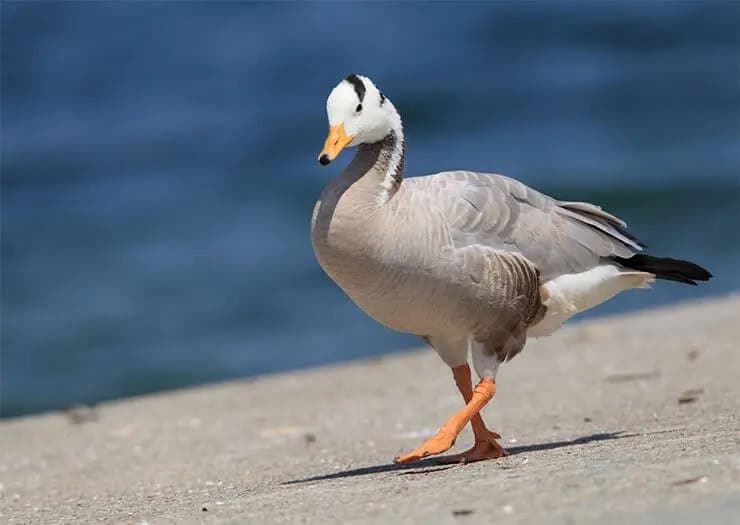
Despite these challenges, bar-headed geese showcase extraordinary endurance, rapidly adjusting to massive altitude changes in mere hours.
This unique adaptation has drawn researchers’ attention, as understanding the goose’s physiological resilience may help develop treatments for health issues related to oxygen deprivation.
Most migratory birds avoid high altitudes, opting for longer routes to minimize oxygen loss. But for bar-headed geese, flying at altitudes beyond 7,000 meters is possible thanks to specialized adaptations.

These geese have developed an efficient hemoglobin system, which allows their blood to transport oxygen more effectively in the thin air.
Scientific Insights into the Bar-headed Goose’s Physiology
Research has shown that bar-headed geese have more capillaries in their wing muscles than other bird species, allowing for better oxygen flow to the muscles that power flight.
Additionally, when oxygen levels drop, the geese slow their metabolism to conserve energy and adjust their wing movements to minimize exertion.
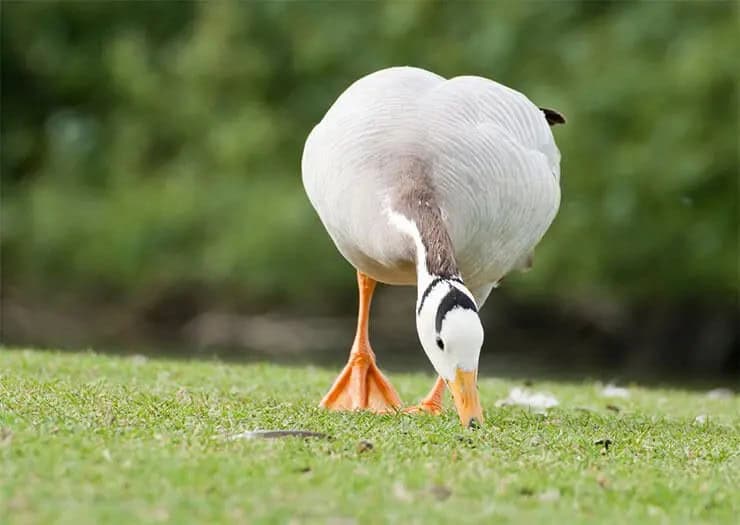
In oxygen-poor conditions, the body temperature of bar-headed geese also decreases, which enhances hemoglobin function. This adaptation helps them maximize oxygen delivery to the pectoral muscles, providing the power needed for sustained flight.
Scientists are hopeful that studying these geese will lead to advances in treating conditions involving oxygen deprivation, such as those following heart attacks.
Physical Characteristics and Behavior
Scientific Name: Anser indicus
Weight: 2.5 – 3.0 kg
Length: 68 – 78 cm
Wingspan: 140 – 160 cm
Lifespan: Up to 20 years
Diet: Seeds, tubers, roots, grains, nuts, insects, and fish
Habitat: Primarily mountain lakes and ponds; often found feeding in agricultural fields during winter
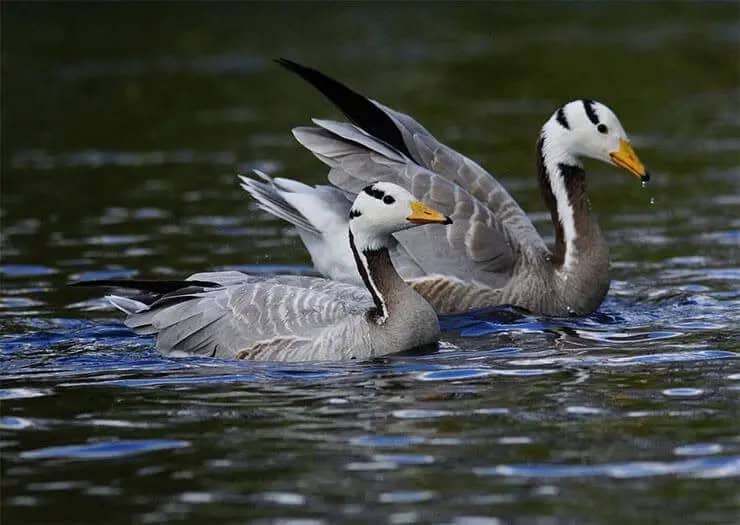
Bar-headed geese are light gray with distinctive white plumage on their heads, yellow-orange beaks and legs, and large wings that enable high-altitude flight. Males are generally larger than females, though they don’t display much difference in appearance. In captivity, they are easily tamed and are known for their peaceful temperament.
Native Range and Migration
The bar-headed goose originates from the mountainous regions of India, Tibet, and nearby areas of Afghanistan, China, Pakistan, and Kashmir. Every year, they migrate beyond the Himalayas, settling for the winter in Assam, northern Burma, and Pakistan’s wetlands.
Diet and Breeding
An omnivorous species, bar-headed geese feed on aquatic plants, grass, insects, and larvae. In captivity, they readily adapt to a variety of diets.
Nesting in large colonies, bar-headed geese build nests close to water to avoid predators, though this placement risks flooding. In the wild, females typically lay up to four eggs, while in captivity, they may lay as many as eight. Both parents care for the chicks, who remain dependent on them for several months until reaching full independence.
Conservation Status
The International Union for Conservation of Nature (IUCN) categorizes the bar-headed goose as Least Concern (LC). Despite being protected in regions like Tibet—thanks to local Buddhist traditions that discourage harm to animals—egg collection and sale still occur.
With an estimated global population of around 50,000, this elegant bird is highly regarded worldwide, and its beauty has contributed to its popularity among bird enthusiasts and breeders alike.
Read More Birds