
The red-breasted goose, a captivating bird recognized for its vibrant plumage, has long fascinated bird enthusiasts and even ancient civilizations. As seen in historic art, these geese attracted the attention of the ancient Egyptians and have continued to charm modern ornithologists across Europe.
Today, most of the world’s red-breasted geese winter along the western shores of the Black Sea, having shifted their wintering grounds over time. They breed in small colonies within the Arctic, often near peregrine falcons or large gulls, which help deter arctic foxes from raiding their nests.
Distribution and Habitat
Known scientifically as Branta ruficollis, the red-breasted goose is primarily found in Arctic Siberia, particularly on the Taymyr and Yamal peninsulas.
In winter, they migrate southward to southeastern Europe, with the largest groups settling along the Black Sea coasts in Bulgaria, Romania, and Ukraine. Although they are sometimes spotted in Greece, Azerbaijan, and occasionally as far as Great Britain, these sightings are rare.
Challenges to Survival
The species faces several threats, primarily due to hunting along the Black Sea coast, particularly in northeastern Bulgaria. Although hunting may not directly target the red-breasted geese, the disturbance prevents them from feeding adequately before their Arctic migration, critical for successful breeding.
Habitat loss also poses a significant threat, driven by oil exploitation and a shift from cereal crops to horticulture and vineyards, making food sources more scarce in their wintering grounds.
Physical Description and Behavior
This small goose, typically 50–55 cm long, is celebrated for its distinct beauty and unique appearance, making it popular among breeders. The red-breasted goose is generally peaceful but can assertively interact with other species when needed.

It lives in large flocks and displays impressive speed when foraging. Their high-pitched, squeaky call, “ki-ioik, ki-ik,” is easily recognizable, and they may raise their nape feathers in an intimidating stance when threatened.
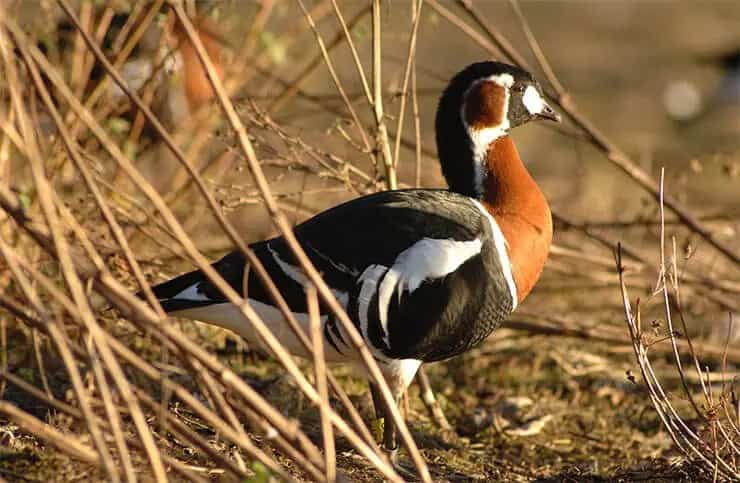
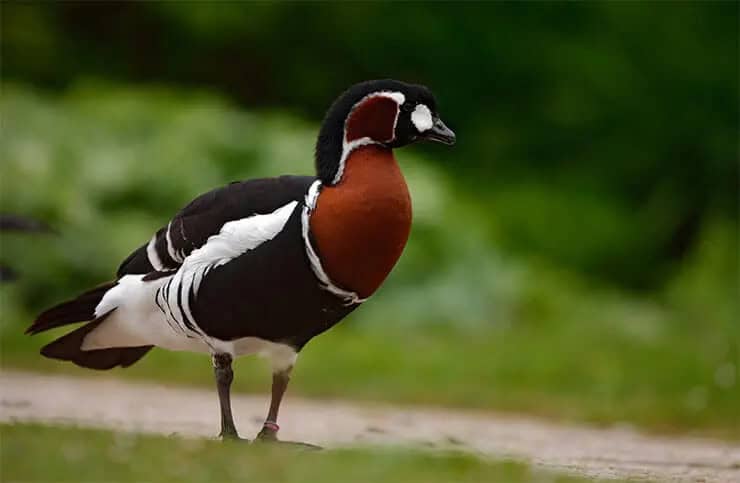
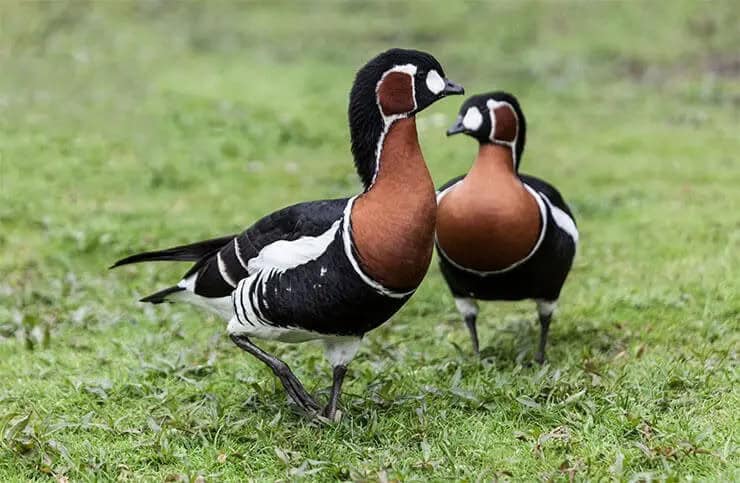
The red-breasted goose is monogamous, and males and females share similar striking plumage. Their colors blend red, white, and black, with a red chest, a black back, and white-bordered markings on the face and neck. Juveniles have less pronounced coloring, which becomes more vivid as they age.
Diet and Feeding
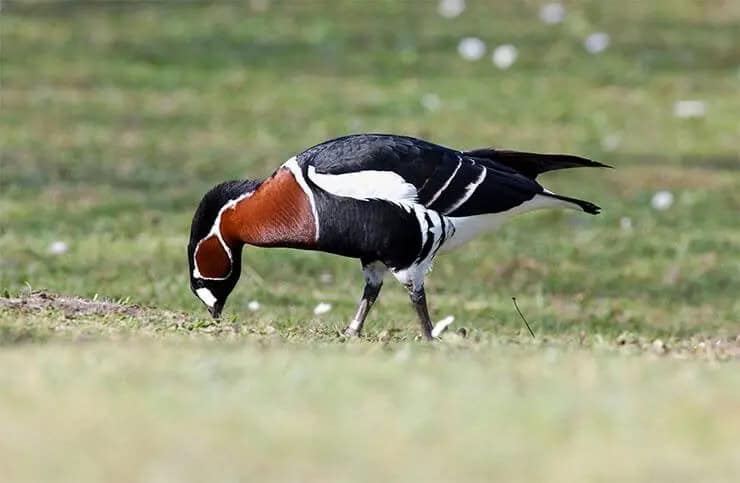
Their diet mainly consists of grasses, grains, seeds, and occasionally small invertebrates like worms and mollusks. While people are often tempted to feed them, this practice can harm their health by creating dependency on humans and disrupting their natural diet.
Breeding Habits
Red-breasted geese nest in shallow depressions on the ground, favoring spots shaded by trees or bushes. Remarkably, they often choose nesting sites close to birds of prey, like peregrine falcons, to benefit from added protection against predators. Although they can adapt to captivity, breeding them requires keeping multiple pairs together to mimic their natural social structure.
Conservation Status
The red-breasted goose is protected under the Agreement on the Conservation of African-Eurasian Migratory Waterbirds (AEWA) and is classified as vulnerable by the IUCN. About 80% of the global population winters in just five key sites, making them highly susceptible to habitat changes.
Their numbers have declined in recent decades, moving them from a “near-threatened” to “endangered” status on the IUCN Red List in 2007. Unfortunately, their population continues to decline, emphasizing the need for ongoing conservation efforts.
Read More Birds