
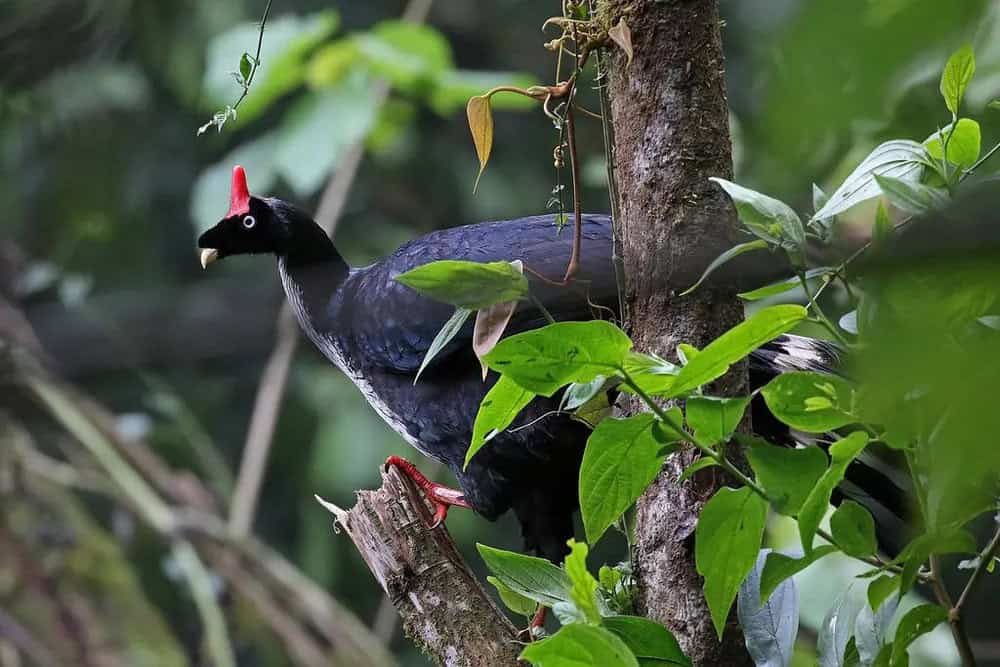
The horned guan (Oreophasis derbianus) is a distinctive bird recognized for its striking appearance and unique habitat within the cloud forests. Known for the vivid red “horn” on its head, this large cracid is a rare and captivating symbol of its environment.
If you prefer not to read the full story,
Skip ahead to watch the video ->
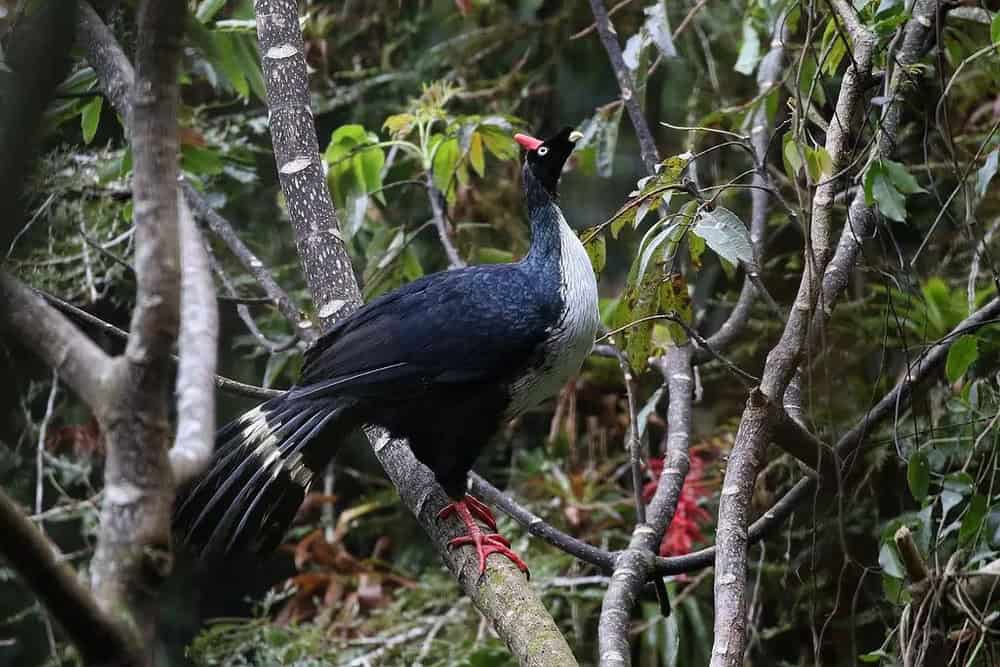
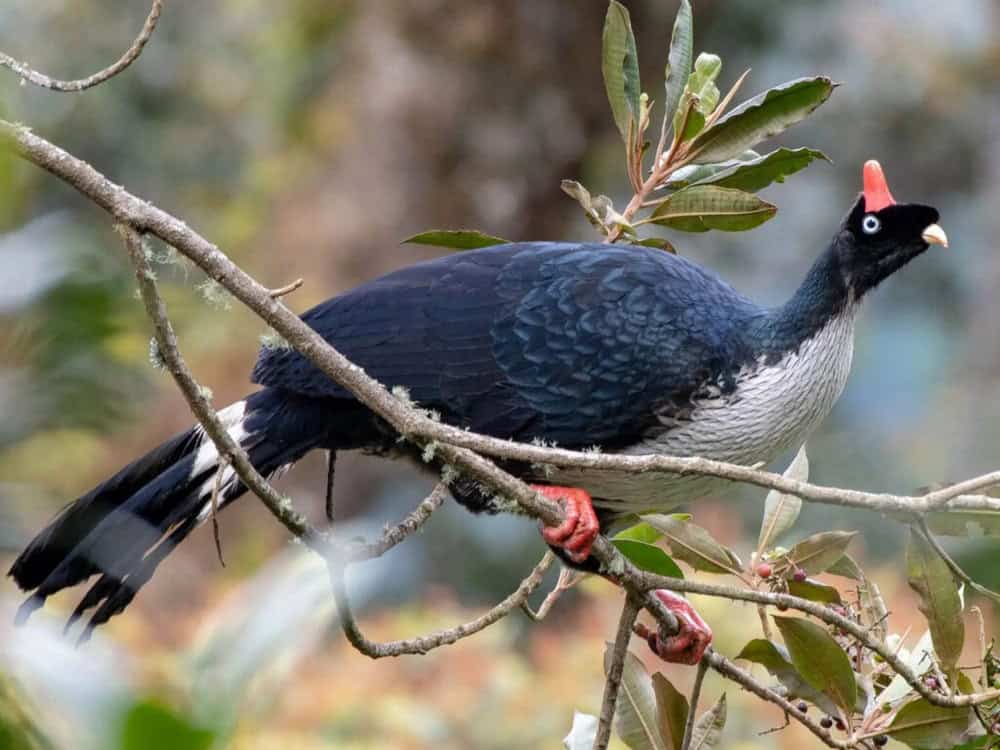
The horned guan’s signature horn measures around 1.6 to 2.4 inches (4 to 6 cm) in length. Its glossy black feathers, with a blue-green sheen, cover much of its body, while its foredeck, breast, and upper belly contrast white with black flecks.

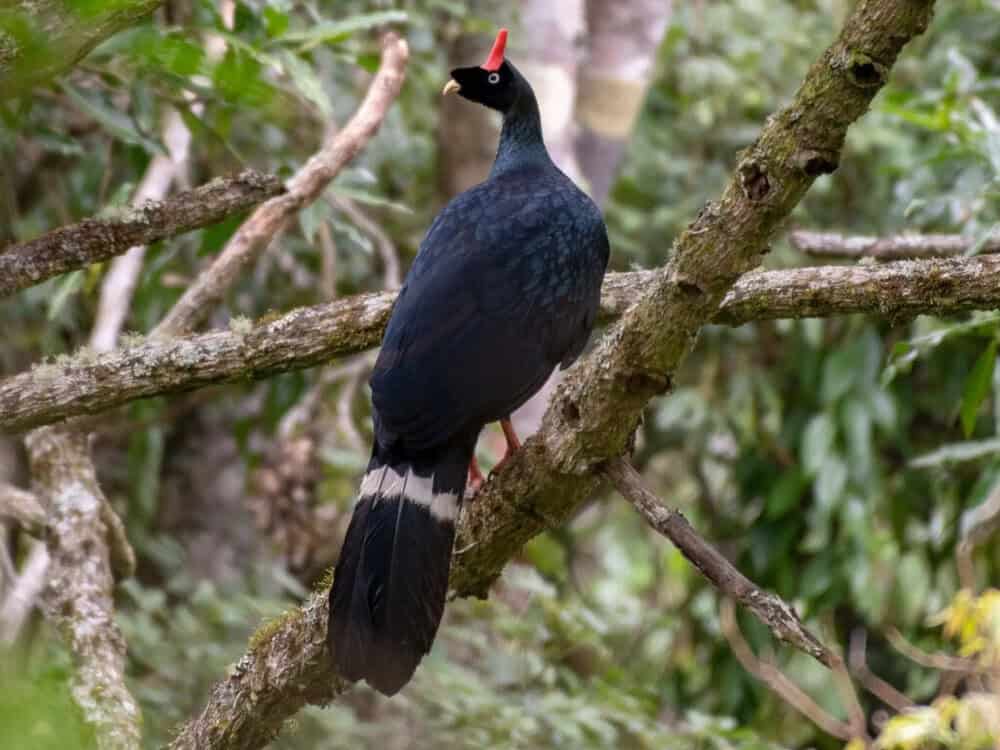
The bird’s brown flanks, white band at the tail’s base, small red dewlap, red legs, white irises, and yellow bill create a stunning visual for bird enthusiasts and nature lovers alike.
Native to the cloud forests of western and central Guatemala and the Sierra Madre de Chiapas in southern Mexico, the horned guan thrives in dense vegetation at 2,000 to 3,500 meters. The misty, humid conditions in these elevations provide an ideal habitat for its survival.
Primarily frugivorous, the horned guan consumes fruits and green leaves, with the occasional addition of invertebrates. As a seed disperser, it plays a key role in forest regeneration, supporting the ecosystem’s health.
From January to July, male horned guans mate with multiple females in a polygynous system during the breeding season. Nests, built roughly 20 meters above ground, are crafted from leaves, bromeliads, orchids, and vines.
Females lay two eggs, incubating alone for about 33 to 36 days. After hatching, chicks leave the nest but may rely on their mother for several months.
Despite their unique qualities, horned guans face serious threats, leading to their classification as endangered by the International Union for Conservation of Nature (IUCN). With a global population of just 600 to 1,700 individuals, their numbers continue to decline.
Habitat loss from deforestation, mainly due to logging, firewood collection, and agricultural expansion, especially for coffee plantations, severely impacts their limited breeding grounds. Additionally, hunting and forest degradation from roaming cattle add to their vulnerability.
To protect the horned guan, dedicated conservation measures are essential. Preserving cloud forests, promoting sustainable land practices, and raising public awareness about the importance of this unique species are crucial actions to secure its future.

By committing to these efforts, we can hope to keep the horned guan’s vibrant presence alive in the cloud forests, adding to our planet’s natural diversity.
For a closer look at the horned guan’s elegance and beauty, check out the video below and let its allure inspire efforts to protect our natural world’s remarkable diversity.

Read More Birds