
New research from The University of Texas at Austin reveals that how fast a mammal can run has a greater influence on its eye size than its body size.
While earlier studies suggested that an animal’s activity patterns, whether nocturnal or diurnal, were the primary drivers of eye size evolution, this research challenges that assumption. Eye shape differs between nocturnal and diurnal species, but their eye sizes are often similar.
Nocturnal animals may seem to have larger eyes due to more exposed corneas for light intake, but this trait has a minor impact on eye size.
Researchers have found that body mass and maximum running speed together account for 89% of the variation in eye size across different mammals.
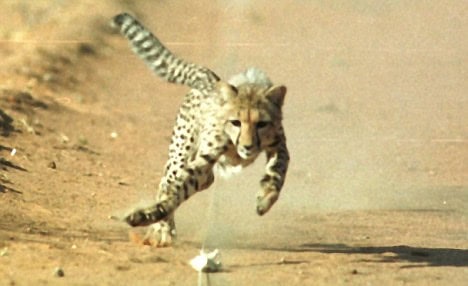
However, the connection between eye size and running speed is stronger than the link between eye size and body mass alone.
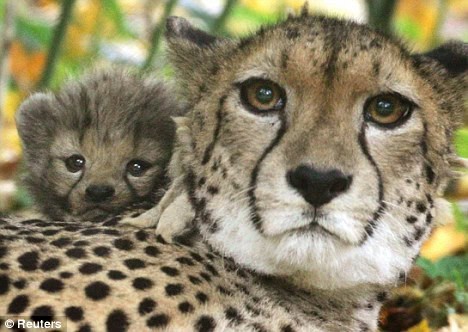
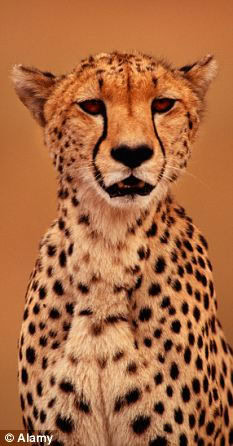
Chris Kirk, an associate professor in the Department of Anthropology, explained: “If you think about fast mammals like cheetahs or horses, you’ll notice they tend to have very large eyes. This helps them navigate their environment and avoid obstacles when moving quickly.”
Kirk and Amber Heard-Booth, a physical anthropology doctoral student, were the first to apply Leuckart’s Law—a theory initially developed for birds and flight speed—to mammals.
Their study examined 50 mammalian species. Heard-Booth presented the findings at the 2011 American Association of Physical Anthropology Meeting, where she won the Mildred Trotter Prize for outstanding graduate research in evolutionary morphology.
The study is set to be published in the Anatomical Record journal.
Kirk further explained that body size naturally influences eye size, with larger animals, like elephants, having bigger eyes than smaller ones, like mice. However, large animals aren’t always fast.
For example, elephants have large eyes but are slower than faster animals like cheetahs or zebras. Similarly, some of the largest rodents, like porcupines, are slow, while smaller rodents can be much faster.
Even when body mass is controlled, running speed remains closely linked to eye size. When both maximum running speed and body mass are considered, nearly all the differences in eye size between species can be explained. According to Kirk, “This is a highly significant finding.”
Read more Wildlife News.


