
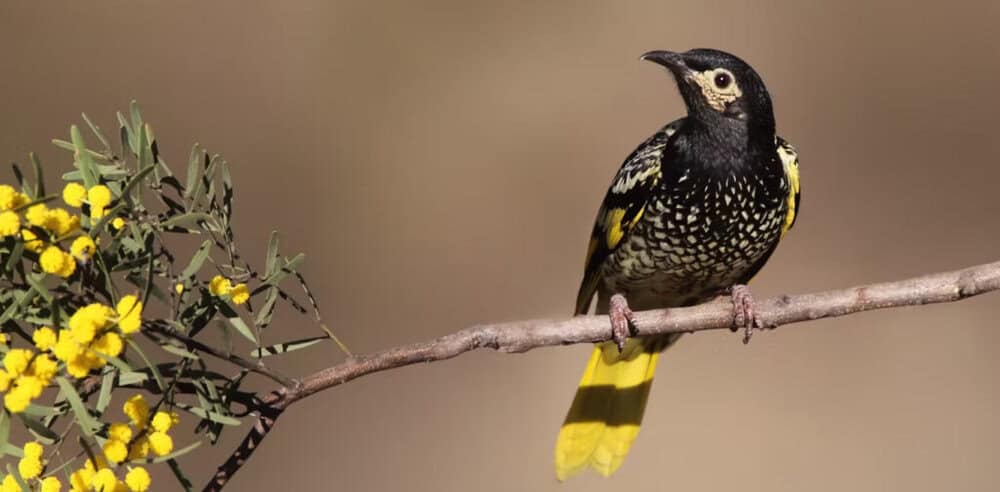
With its striking plumage and unusual behaviors, the Regent Honeyeater (Anthochaera phrygia) has become a cherished sight for bird lovers and conservationists across Australia.
Often called the “jewel of the forest,” this beautiful bird is easily recognized by its vivid mix of black, yellow, and white feathers. The Regent Honeyeater is well adapted to feeding on nectar, using its large, curved beak to access the blooms of various flowers.
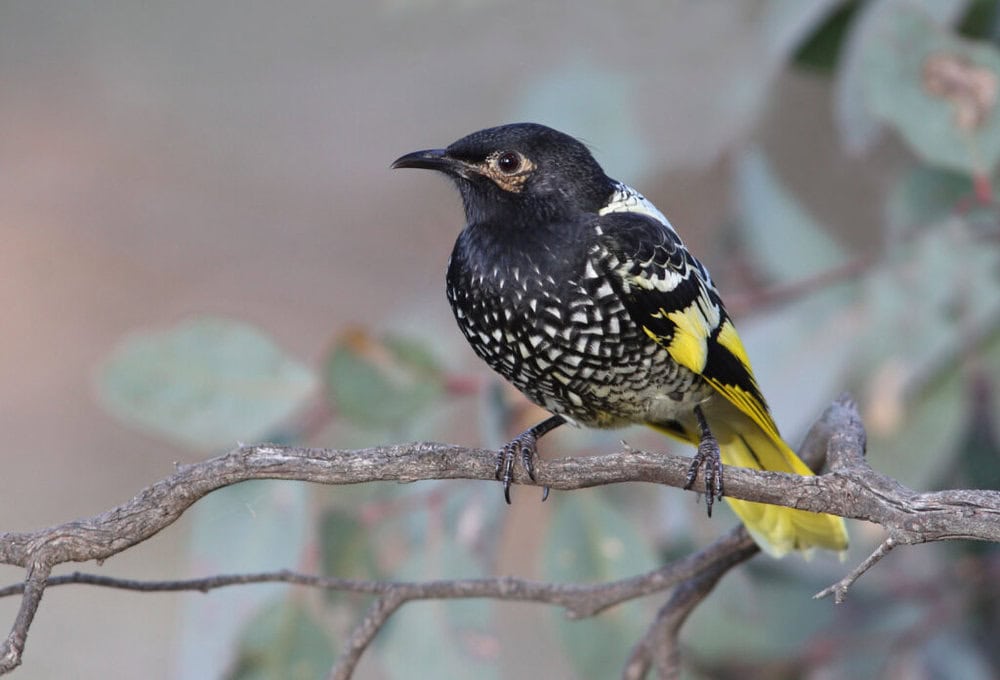
This rare species, native to the woodlands and forests of southeastern Australia, relies heavily on the nectar from eucalyptus trees for sustenance and nesting. However, its habitat is in jeopardy due to widespread land clearing, habitat fragmentation, and the intentional removal of eucalyptus trees.
These changes have placed severe stress on the Regent Honeyeater population, estimated to have dwindled to fewer than 400 individuals, putting it at serious risk of extinction. In response, government agencies and conservation organizations have launched dedicated initiatives to protect the species.
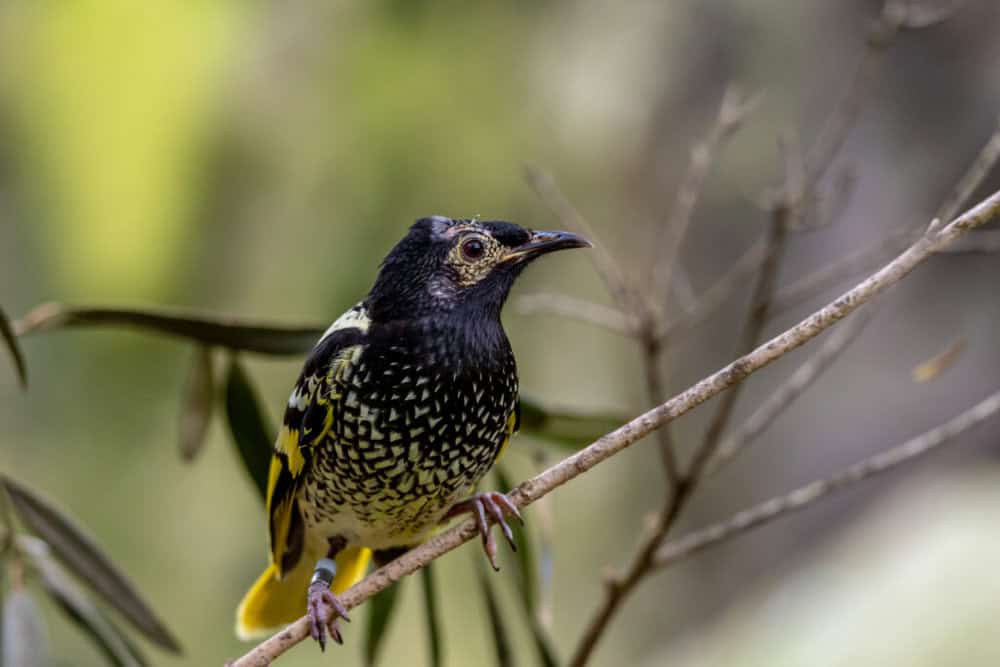
Their efforts include habitat restoration, breeding programs that reintroduce captive-bred birds to the wild, and public awareness campaigns highlighting the importance of preserving this distinctive bird. These actions aim to secure the Regent Honeyeater’s future and foster a greater appreciation for the species.
Habitat restoration is critical in conservation efforts, as it allows these birds to move freely and select suitable nesting areas. Conservation groups are working on rehabilitating degraded areas and connecting fragmented habitats to enable better movement and nesting opportunities for the species.
Replanting eucalyptus trees and other nectar-rich flora is crucial in rebuilding the natural environment the Regent Honeyeater depends on. Captive breeding programs have also had a positive impact.
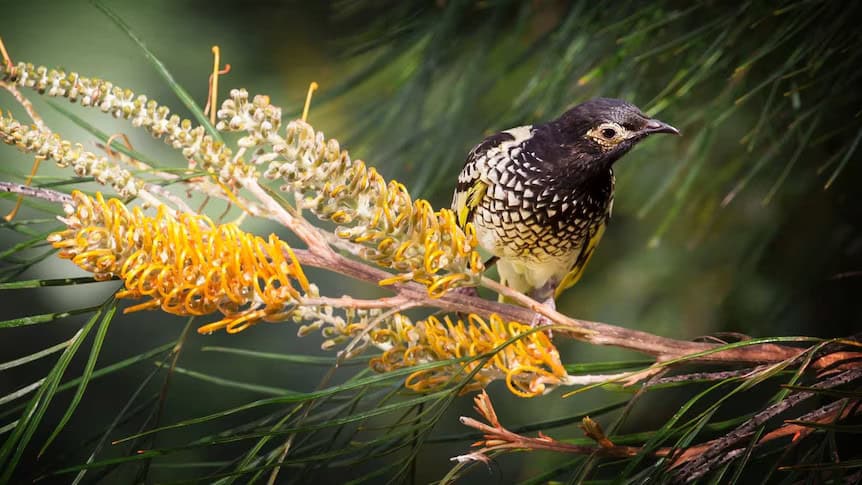
By breeding birds in captivity and reintroducing them into their natural habitat, conservationists aim to boost genetic diversity and increase breeding success. Experts closely monitor released birds to ensure they thrive and establish self-sustaining populations.
Public awareness and community involvement are essential to the success of these conservation efforts. Educating people about the bird’s endangered status and the importance of its habitat helps generate public support.
Individuals can actively contribute to preserving this remarkable species through community engagement initiatives, such as volunteer opportunities and citizen science projects.

Read More Birds