
Reeves’s Pheasants stand out for their impressive size and striking looks. Native to central and eastern China, they have also been introduced to parts of Europe, including France, the Czech Republic, and some areas in the UK. This overview highlights the pheasant’s characteristics, habitat, behavior, and conservation concerns.
The male Reeves’s Pheasant has a distinctive appearance, with a white head and a black facial mask extending down the neck. Its vibrant golden-chestnut body contrasts with intricate black scales on the back, and the breast can appear either black or chestnut.
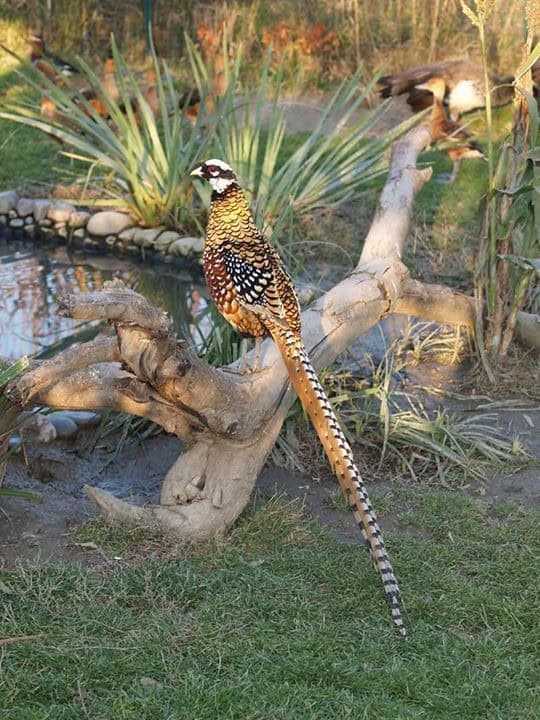
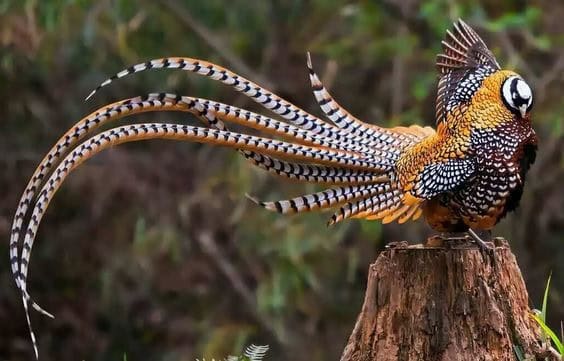
The tail, however, is its most remarkable feature, showcasing a buff-orange color with a striking black-and-white pattern. The tail length of Reeves’s Pheasant is the longest among all pheasants, occasionally reaching over 200 cm (82 inches) in mature birds.
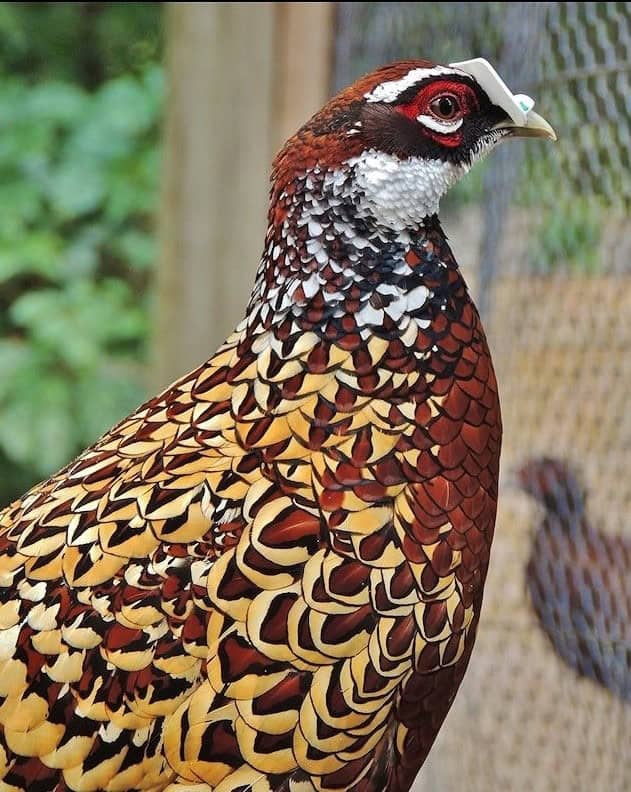
Female pheasants, though more subdued in color, possess their unique markings. They display a black pattern on the head, buff-brown faces, and dark masks. Their bodies combine brown, chestnut, and buff shades with subtle barring, and their tails are notably shorter than the males.
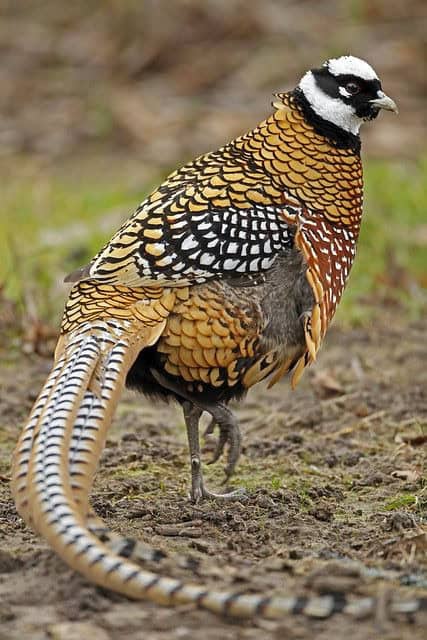
Regarding size, Reeves’s Pheasants are large birds, with males significantly larger than females. Male pheasants typically reach 210 cm (82 inches) in length, while females average around 150 cm (59 inches).
Wingspans range from 55 to 90 cm (21 to 35 inches), and males are generally heavier, weighing about 1500 g (53 ounces) compared to 950 g (34 ounces) in females.
The pheasant was named after British naturalist John Reeves, who introduced live specimens to Europe in 1831. It belongs to the Syrmaticus, which includes other long-tailed pheasants like the Copper, Mikado, Elliot’s, and Mrs. Hume’s pheasants.
During the breeding season, male Reeves’s Pheasants can become aggressive, defending their territory against other males—a behavior influenced by hormones and pheromones as they protect their partners and space.
Typically, these pheasants live up to 9 years. They are currently listed as Vulnerable, with an estimated 2,500 to 10,000 mature individuals in China facing threats from habitat loss, poaching, and poisoning. Although established in parts of Europe, these introduced populations are also in decline.
Reeves’s Pheasants have a varied diet, including seeds, fruits, insects, snails, worms, buds, and fresh shoots, foraging on the ground by scratching and digging. During winter, they often gather in small groups, usually composed of females and young birds.
Although little is known about their courtship, male Reeves’s Pheasants are thought to be polygynous and are often seen with multiple female partners.
The female builds nests on the ground in grassy areas or shrubs, laying 6 to 9 cream or olive-colored eggs. Females incubate the eggs and care for the chicks, while males focus on territorial defense.
Reeves’s Pheasants are found in evergreen woodlands, bushy grasslands, and on steep slopes at elevations 200 to 2600 meters in their native range. European populations inhabit lowland forests and occasionally farmland.

While capable of flight, Reeves’s Pheasants prefer to remain on the ground, as flight is energy-intensive and usually limited to short distances.
Reeves’s Pheasants are captivated by their unique appearance, large size, and remarkable tails. However, with population numbers declining due to various threats, conservation efforts remain essential to protect this magnificent species in the wild.

Read More Birds