
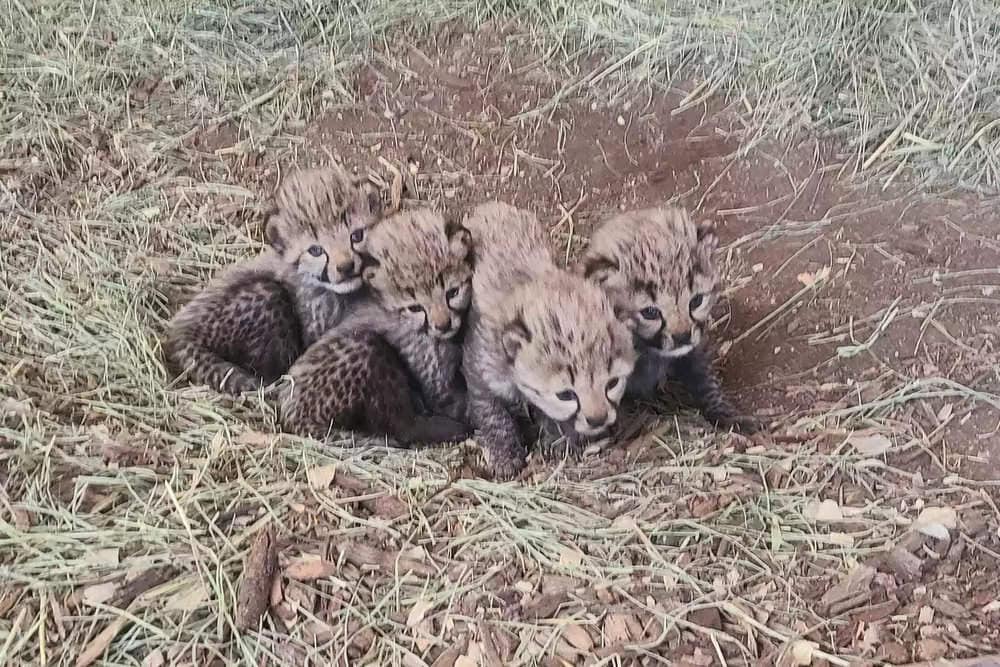
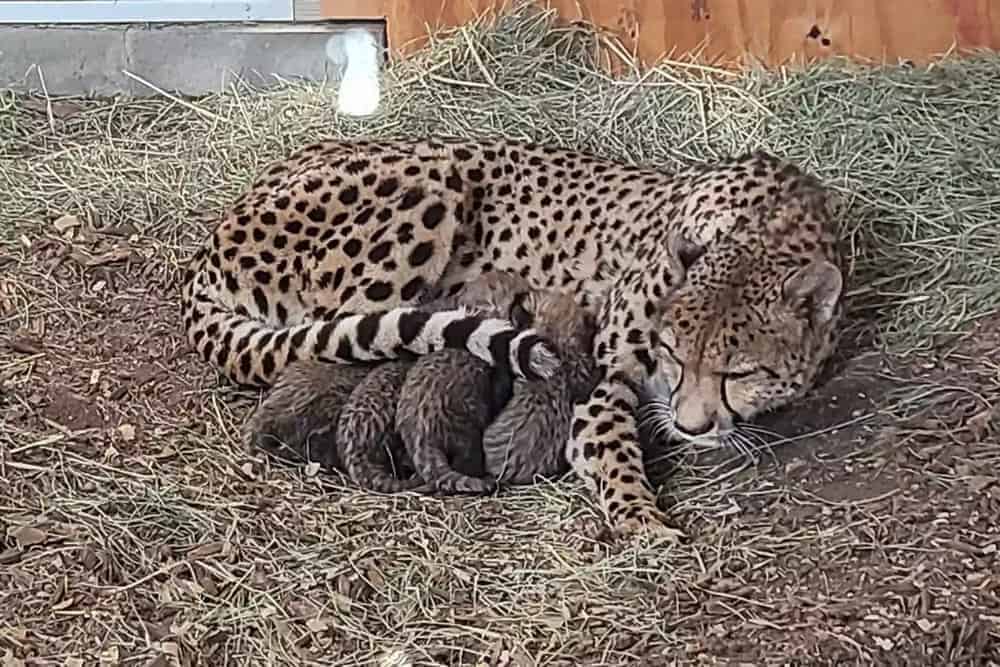
The Henry Doorly Zoo and Aquarium in Omaha has welcomed four cheetah cubs, thriving under the attentive care of their first-time mother, Clio.
The joyful announcement came from the Nebraska Zoo on a recent Tuesday, revealing that the cubs were born on November 14 at the Lee G. Simmons Wildlife Safari Park. Their father is a cheetah named Refu.
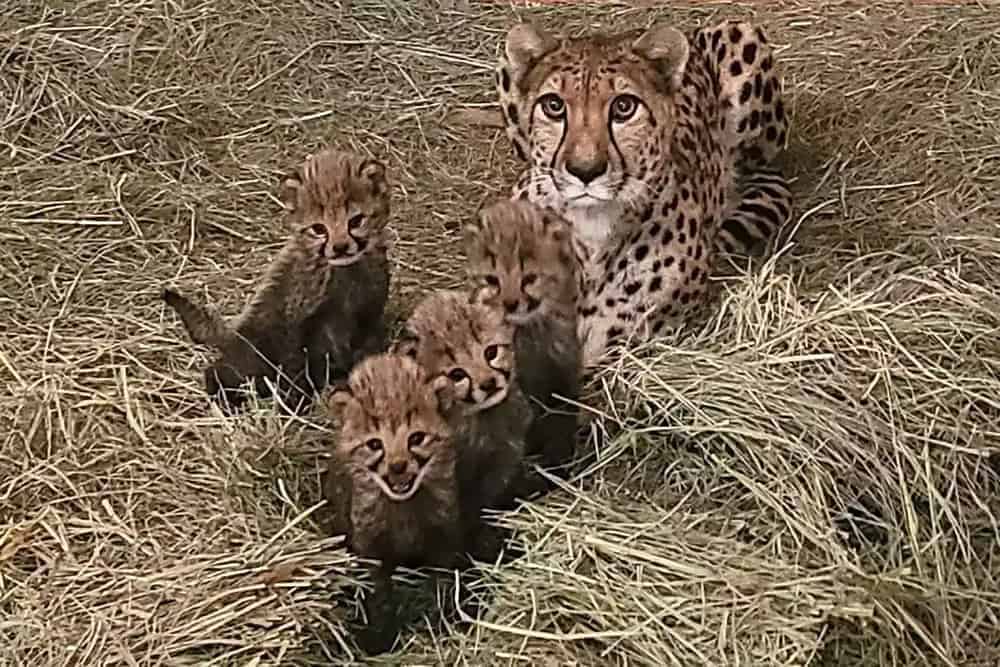
With this latest litter, the Wildlife Safari Park has seen 29 cheetah cubs born since 2014. Clio has been devoted to her little ones, ensuring they are cared for during their early days.
Zookeepers have chosen to minimize interference to promote bonding among the family. The cubs are expected to have their first veterinary examination on December 19.
When she was five years old, Clio joined the wildlife park in April 2022 from the White Oak Conservation Center in Yulee, Florida.
These cubs represent the second set sired by eight-year-old Refu, who arrived at the park in 2019 from the Maryland Zoo in Baltimore.
The Omaha Zoo plays a significant role in conservation, being a member of the National Cheetah Breeding Center Coalition and one of nine accredited institutions under the Association of Zoos and Aquariums that support responsible cheetah breeding efforts.
Dr. Jason Herrick, the zoo’s vice president of conservation and animal health, highlighted the value of collaboration among zoos.
He remarked, “These cubs are a great example of the collaboration benefits among zoos. Not long ago, cheetahs were considered more difficult to breed in zoos.”
Through these cooperative efforts, the Wildlife Safari Park is now home to 25 cheetahs, including the four new cubs.
The zoo’s Interactive Animals Program also houses five cheetahs, consisting of four sisters and two males, who live off-exhibit.
Dr. Herrick also pointed out the unique approach to their breeding program, stating, “For most species, we set up one male and one female on a high-stakes blind date and hope for the best. With cheetahs, the extensive facilities permit us to maintain multiple males and females, allowing them to choose their mates from several eligible bachelors or bachelorettes.”
Read more Wildlife News.


