
In the wild, predators typically have the upper hand, but sometimes nature throws a curveball. This happened when a curious lion encountered a pangolin at the Selous Game Reserve in Tanzania, only to find itself stymied by the pangolin’s unique defense mechanism.
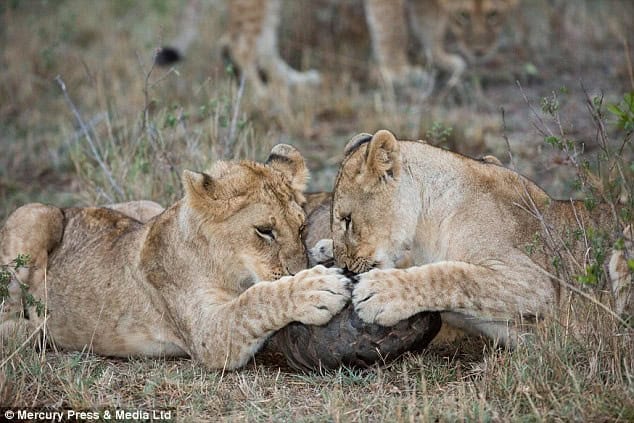
Mark Sheridan-Johnson, a British wildlife guide, managed to film this unusual event. The lion, intrigued by the pangolin’s strange, armored appearance, attempted to catch and eat it.
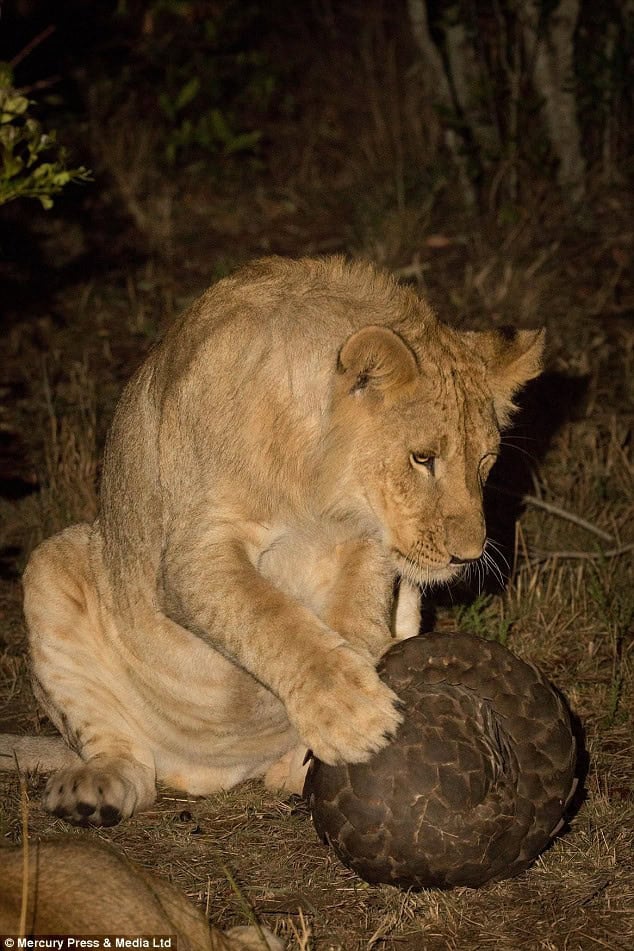
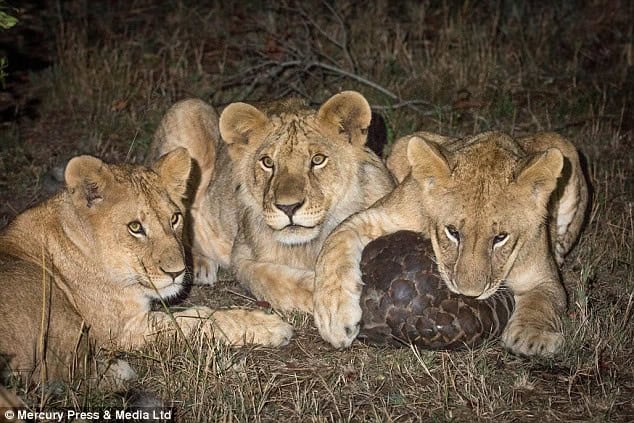
Pangolins protect themselves by rolling into a tight, armored ball. This particular pangolin employed this tactic flawlessly, remaining curled up and immobile despite the lion’s persistent efforts.
Photos from the encounter show the lion’s frustration as it struggled to manage the spherical pangolin. It tried using its paws and mouth, but the pangolin’s defense was unyielding.
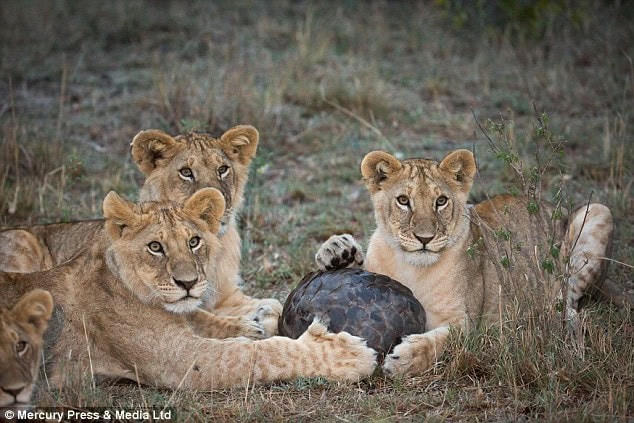
Guiding a group of tourists, Sheridan-Johnson described the scene as a rare and unforgettable experience.
Spotting a pangolin in the wild is a coveted achievement for African wildlife guides due to its elusive nature.
“The pangolin is incredibly difficult to spot. Many guides consider it the holy grail of sightings. You could spend your whole life searching and never see one. So when we saw one being attacked by a lion, we were in disbelief,” Sheridan-Johnson recounted.
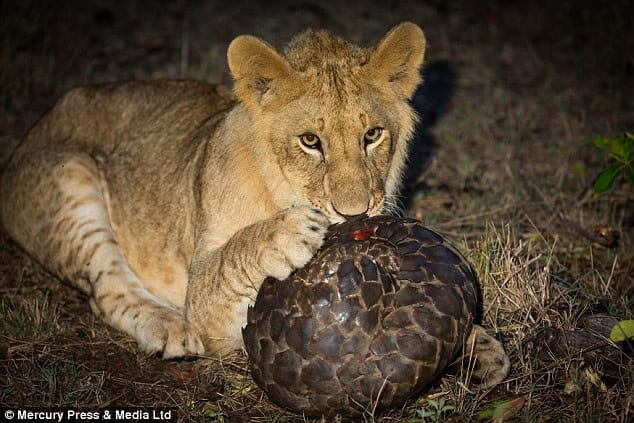
Fortunately for the pangolin, the lion eventually gave up after realizing it couldn’t make a meal from its armored prey. The pangolin stayed defensive until the lion left in search of easier prey.
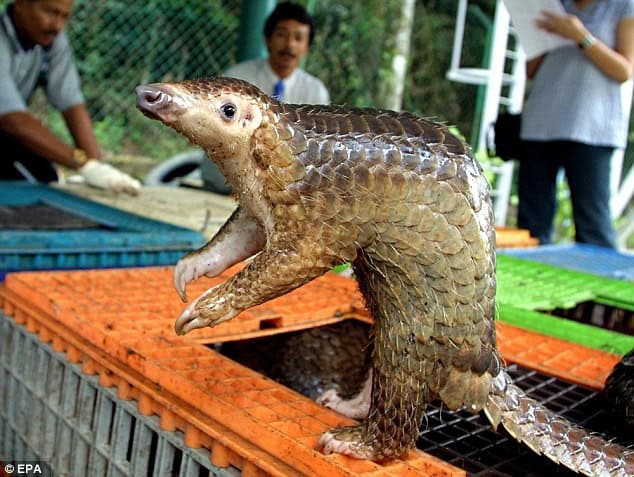
Pangolins are known for their effective self-defense, which involves curling into a ball to protect against predators. Their sharp scales can even injure predators attempting to eat them.
Ultimately, the lion walked away empty-handed, and the resilient pangolin continued once the coast was clear.
The Selous Game Reserve, the site of this extraordinary encounter, is Africa’s largest protected wildlife reserve, covering five percent of Tanzania’s land.
It is located in the remote southeast and features a diverse landscape of rivers, hills, and plains. It is named after British explorer Frederick Courtney Selous, who documented his travels there and served there during World War I.
Read more Wildlife News.


