
The barn owl, often misunderstood, has been a vital partner in controlling rodent populations for centuries. Despite their benefits, they are often feared in various cultures, known by names like “demon owl” or “ghost owl” due to their pale coloring, unique facial features, and eerie screeches.
Misconceptions and superstitions have led to widespread persecution of these birds, but growing awareness and educational efforts are helping dispel these myths.

Key Facts About the Barn Owl:
1. Habitat and Distribution
The barn owl is one of the world’s most widespread birds, found across North and South America, Europe, Asia, Africa, and Southeast Asia.
They thrive in open habitats like grasslands, woodlands, and farmlands but can also adapt to urban areas. Although primarily sedentary, younger owls sometimes travel long distances from their nesting sites.

2. Physical Identification
Barn owls have long wings and short, square tails, which help distinguish them in flight. Known for their heart-shaped faces and dark, deep-set eyes, they sport a mix of brown and beige feathers, with females often showing more spotting than males.
Juvenile barn owls are covered in white down and begin to develop their characteristic facial shape early on.
3. Diet and Hunting Patterns
Barn owls primarily feed on rodents and small mammals but also hunt birds, bats, reptiles, amphibians, and insects. They hunt by gliding slowly over fields, often hovering to detect prey with their exceptional hearing.
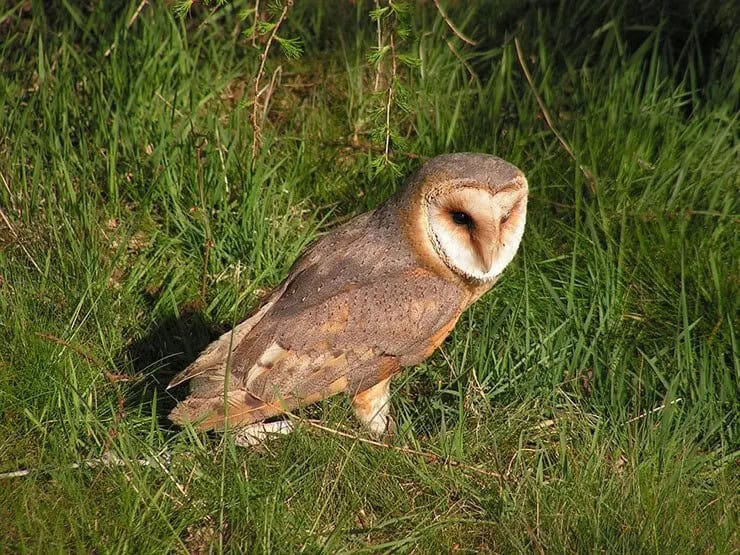
Their unique wing structure allows for silent flight, and they use talons and beaks to capture and dismember their prey. Any indigestible parts are regurgitated as pellets, which researchers often study to learn more about their diets.
4. Nocturnal Lifestyle
Primarily active at night, barn owls rely on their acute hearing to locate prey in total darkness. Their asymmetric ear placement enhances their ability to pinpoint sounds, even from prey hidden beneath snow or vegetation.
Their stealthy, quiet flight and long, slender legs make them effective hunters, even in dense foliage or snowy conditions.

5. Sounds and Defense Mechanisms
Barn owls stand out among other owls because they don’t hoot; instead, they emit a high-pitched “shree” sound. When threatened, they flip onto their backs, using their talons defensively while emitting hissing noises. They also have an endearing chirp when content and a shrill “twitter” sound as part of courtship displays.
6. Breeding and Nesting
Barn owls are monogamous, with breeding seasons varying based on location and food availability. Courtship includes chasing, screeching, and complex flight patterns. Males hunt for food to nourish the females, who stay near the nest during incubation.
Known as cavity nesters, barn owls often choose trees, cliffs, and even man-made structures. Females use regurgitated pellets to create nest material for chicks, which hatch over a few weeks.
7. Threats and Lifespan
Barn owls face threats from predators like raccoons, hawks, and even other owls. Parasites, such as mites and worms, are common. They have an average lifespan of about four years in the wild, with many succumbing to winter starvation or collisions with vehicles and power lines. Habitat loss and pesticide use also contribute to population declines.
8. Human Connections
While barn owls were once thought to be ominous, they are incredibly beneficial to farmers due to their role in controlling rodent populations.
Although some people keep barn owls as pets, experts advise against it. Farmers often build nest boxes on their properties to encourage natural rodent control, avoiding the need for harmful poisons.
Supporting Barn Owls
You can help barn owls by installing nest boxes, especially in areas where natural nesting sites are scarce. For farmers, nest boxes offer an eco-friendly solution to pest control, enhancing barn owl populations and reducing reliance on rodenticides.