
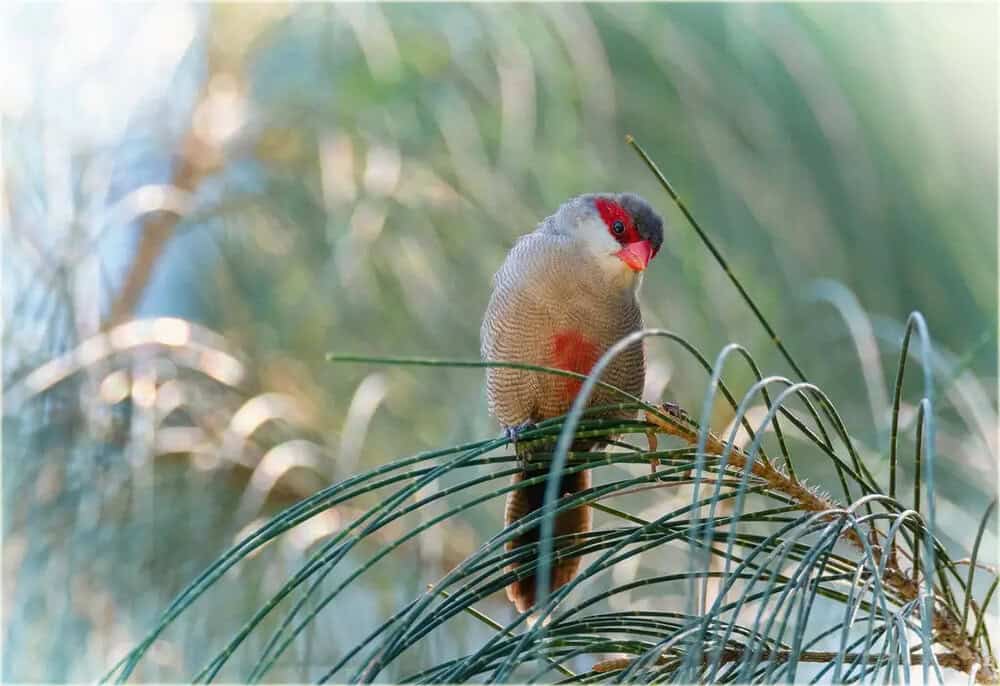
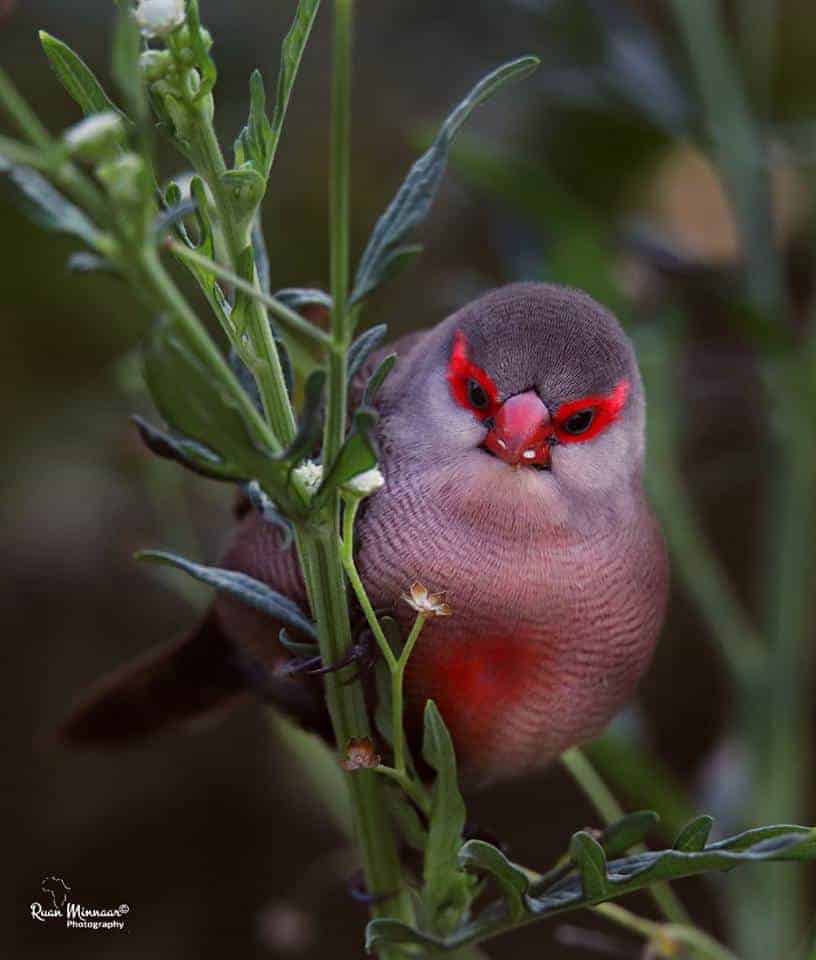
The common waxbill, known scientifically as Estrilda astrild or St Helena waxbill, is a small, visually distinct bird, instantly recognizable by its striking red face and chest against its delicate, black-and-white-speckled feathers.
This passerine species is part of the estrildid finch family, which measures about 4 to 5 inches in length. Its upper feathers are a subtle gray, interlaced with gray-brown bars, while its underparts have a pinkish-beige hue with dark gray barring along the sides.
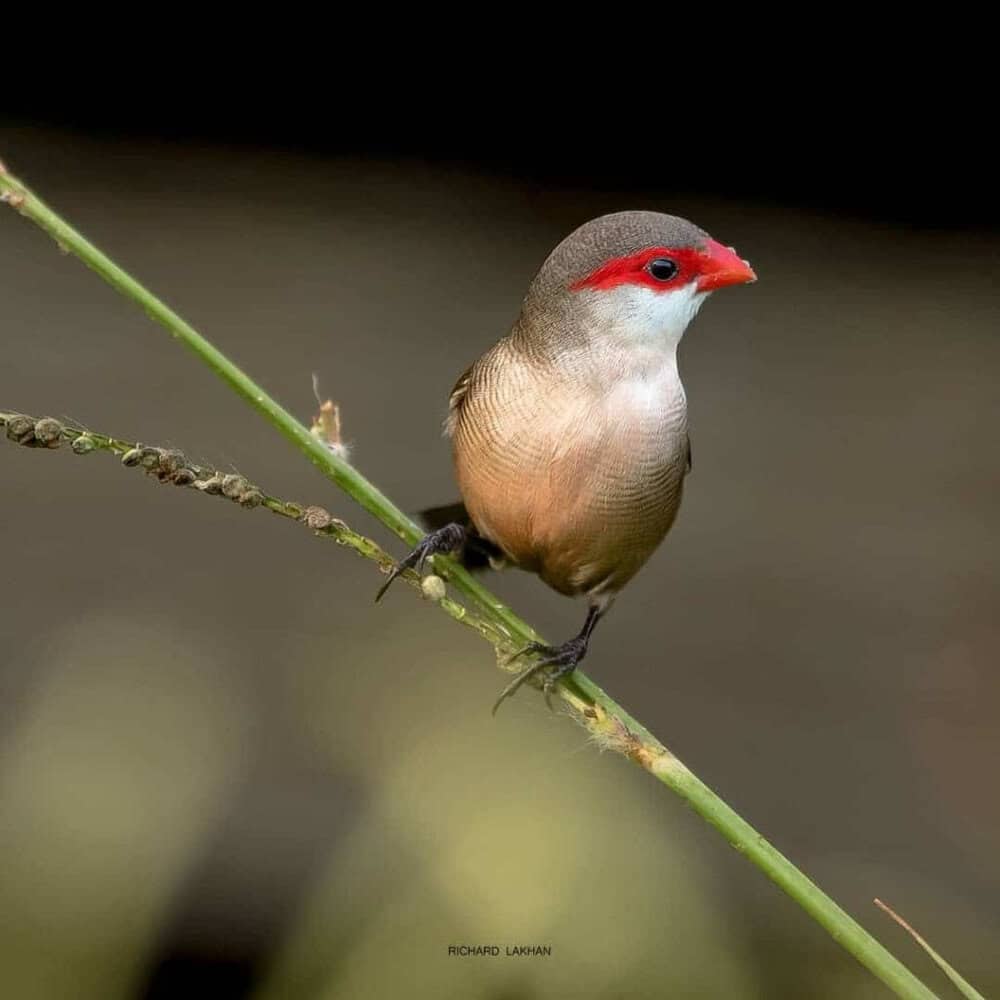
The most distinctive feature of this bird is the bold red patch on its belly, adding a unique pop of color. The waxbill’s undertail feathers are blackish, with black and white detailing on the tips.
Females closely resemble males but appear slightly paler, with a more subtle red belly patch. Juveniles, however, show duller colors and often lack the red belly patch.
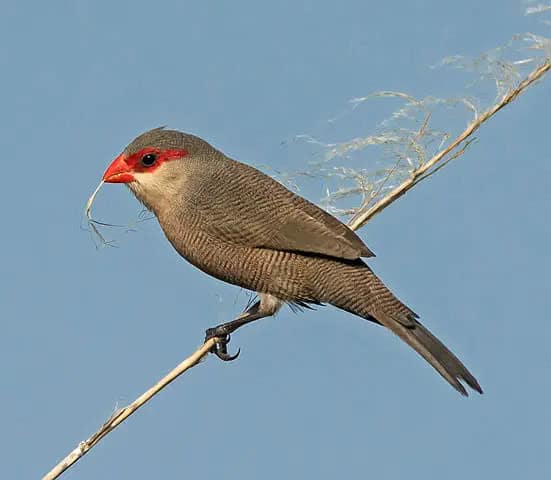
Originally from sub-Saharan Africa, the common waxbill has since spread globally. It prefers open, grassy areas, thriving in dry habitats such as shrubby landscapes, open pastures, and even urban settings. Forest edges and clearings also serve as everyday environments for this adaptable bird.
Common waxbills often forage on the ground for seeds in grassy areas and occasionally feed on flying termites, displaying quick, nimble flight.
During the breeding season, common waxbills create intricate nests from grass, with a special roost above the nest for the male. The nest is built close to the ground, resembling a ball of grass and coconut fibers with a tunnel-like entrance.

The female typically lays up to four eggs, and both parents share incubation duties over about 10 days. They continue to care for the hatchlings together, with the young birds learning to fly between 17 and 21 days after hatching.
Despite being popular as a caged bird, the common waxbill population remains stable in the wild due to its widespread presence.

Read More Birds