
A recent discovery in eastern India’s Similipal Tiger Reserve has captured the attention of scientists worldwide.
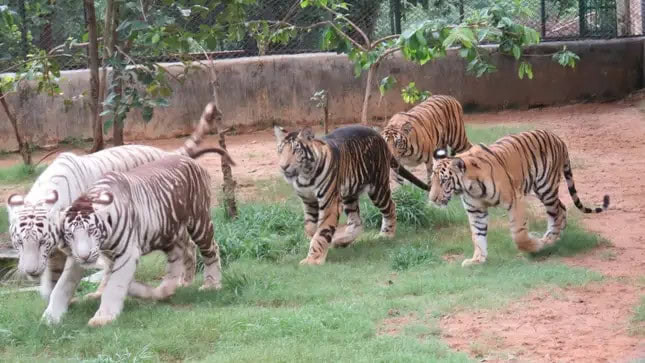
Here, tigers with unusually thick and merged black stripes, giving the impression of dark coats, showcase a rare genetic phenomenon.

A joint research effort by geneticists from India and the United States has pinpointed the mutation behind this captivating trait.
These tigers display a form of “pseudo-melanism” where their wide, merged stripes create a predominantly dark appearance.
Unlike leucistic tigers, which are white with black stripes due to a separate genetic anomaly, pseudo-melanic tigers appear darker overall.
Roughly one-third of the tigers in Similipal exhibit this rare characteristic, distinguishing them from their more commonly patterned counterparts.
Led by Dr. Vinay Sagar of the Tata Institute of Fundamental Research, the research team examined the DNA of 85 tigers across four subspecies.
Their findings, published in the Proceedings of the National Academy of Sciences, uncovered a mutation in the Taqpep gene in pseudo-melanic tigers.
The mutation impacts both gene copies, altering the typical stripe pattern by widening and occasionally fusing the stripes.
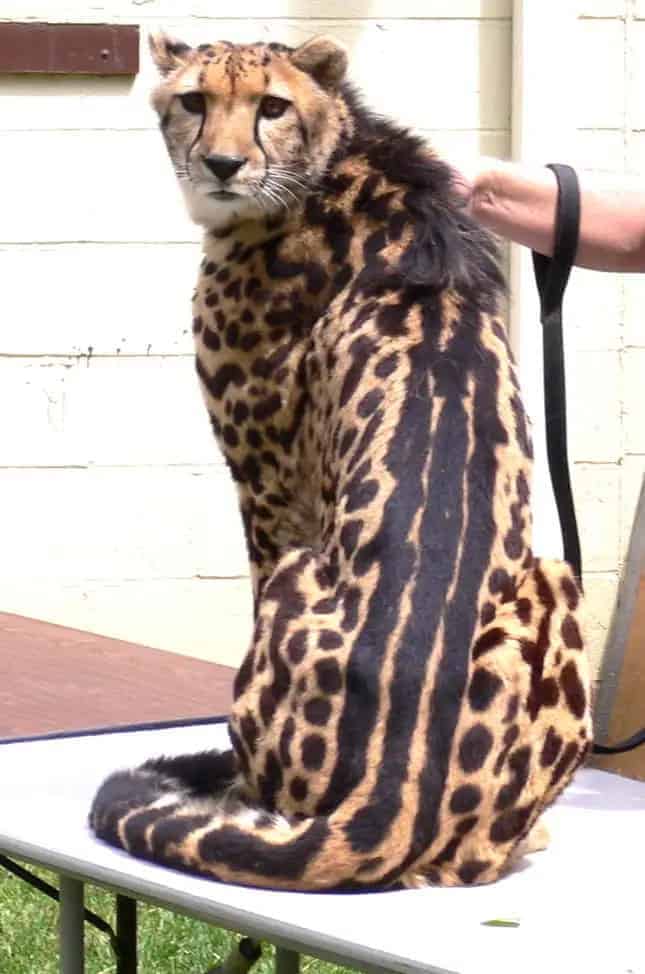
Dr. Greg Barsh, a geneticist from Stanford University and the HudsonAlpha Institute for Biotechnology, explained that this mutation intensifies the black pigmentation in the tigers’ coats, similar to how recessive genes produce distinct markings in species like tabby cats and cheetahs.
Despite the allure of their unique appearance, tigers globally face numerous threats, with three out of eight tiger subspecies already declared extinct. The remaining populations are critically endangered, and those in captivity risk genetic diversity loss.
Conservation geneticist Dr. Uma Ramakrishnan from the Tata Institute of Fundamental Research highlighted the challenges isolated populations face, like those in Similipal, which are vulnerable to genetic drift and inbreeding.
The prevalence of the Taqpep mutation in this area may result from this limited genetic pool.
Interestingly, the team suggests that the pseudo-melanic trait could offer survival benefits, similar to melanistic leopards, which blend well into dense forest environments.
These tigers dark stripes may enhance camouflage in the jungle, potentially improving their chances of thriving in the wild.
This discovery of the genetic roots behind pseudo-melanism in tigers provides a fresh perspective on the complex interplay of genetics, evolution, and survival adaptation, highlighting the rich diversity within tiger populations.
Read more Wildlife News.