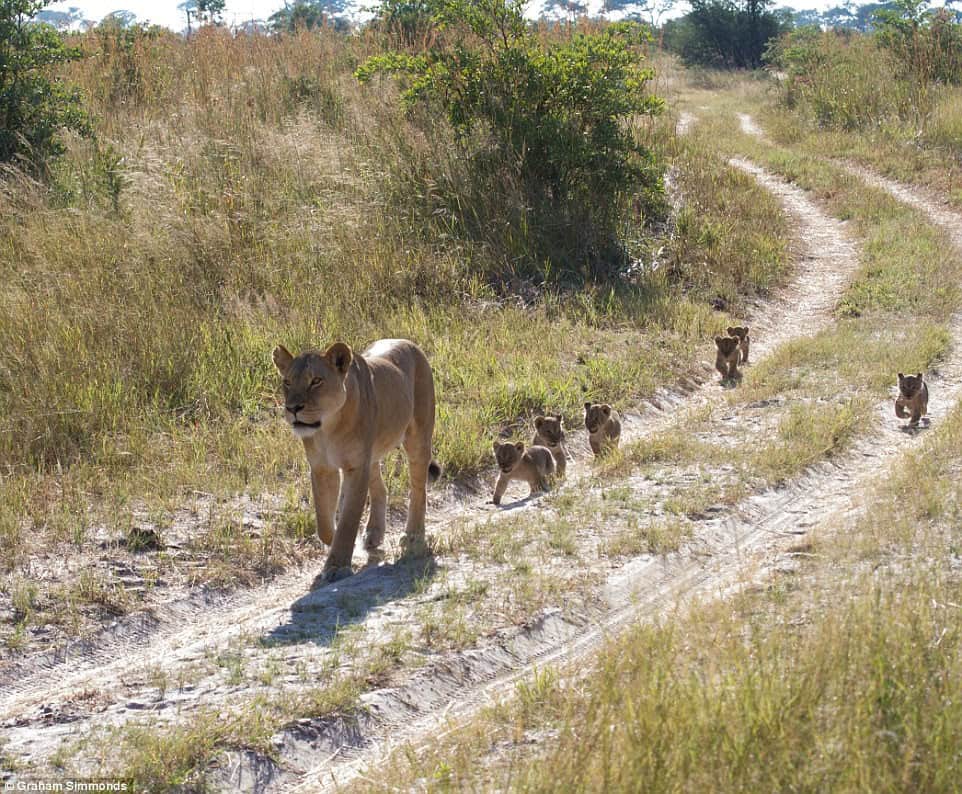
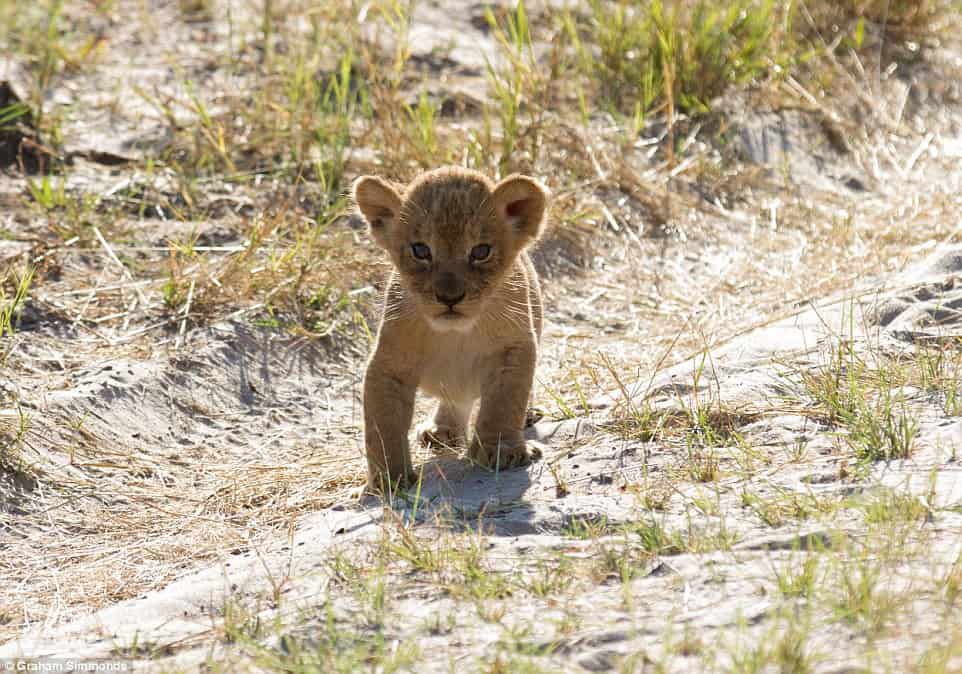
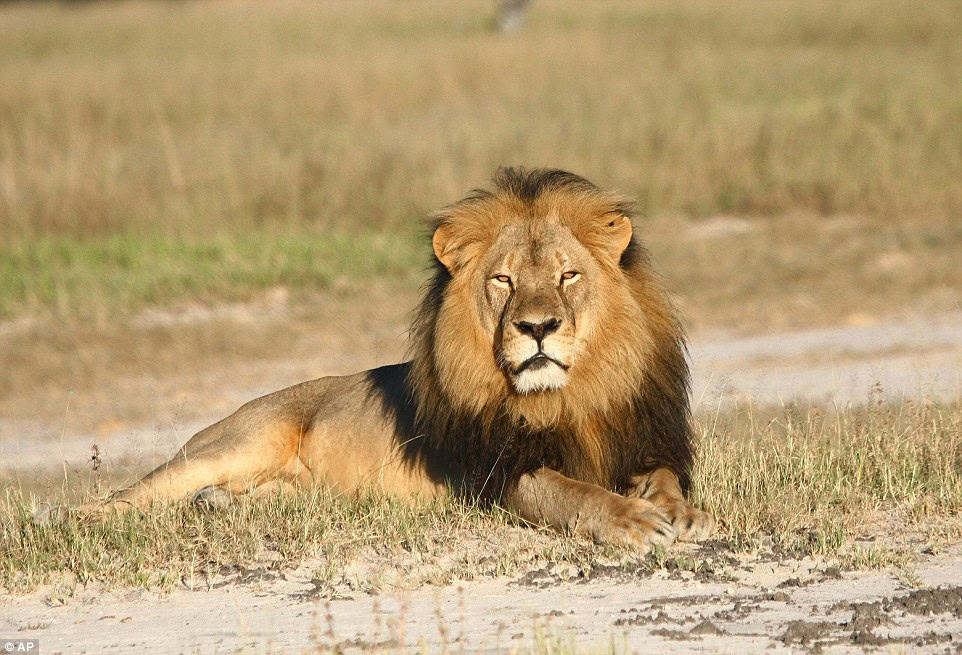
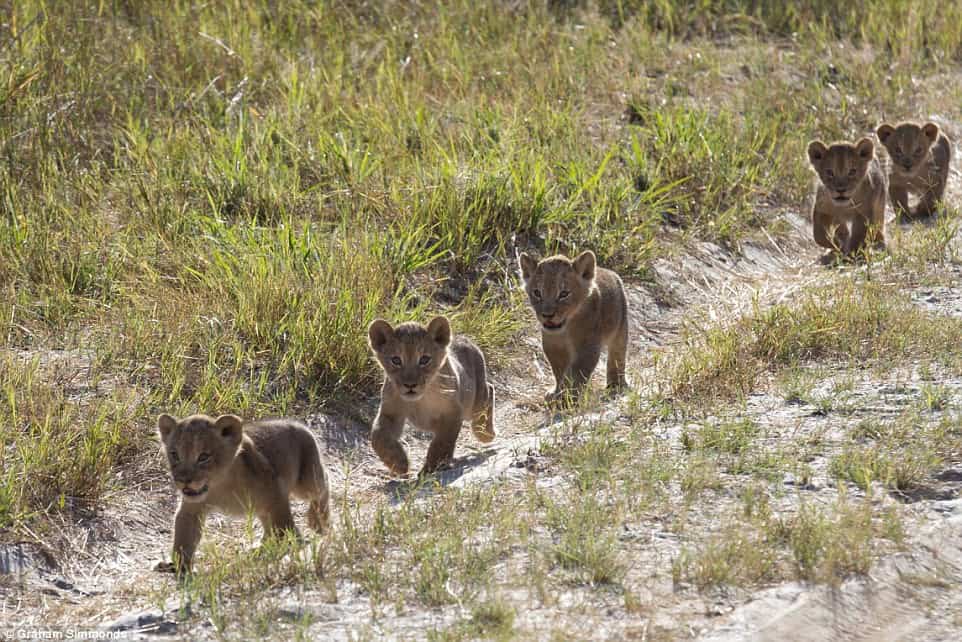
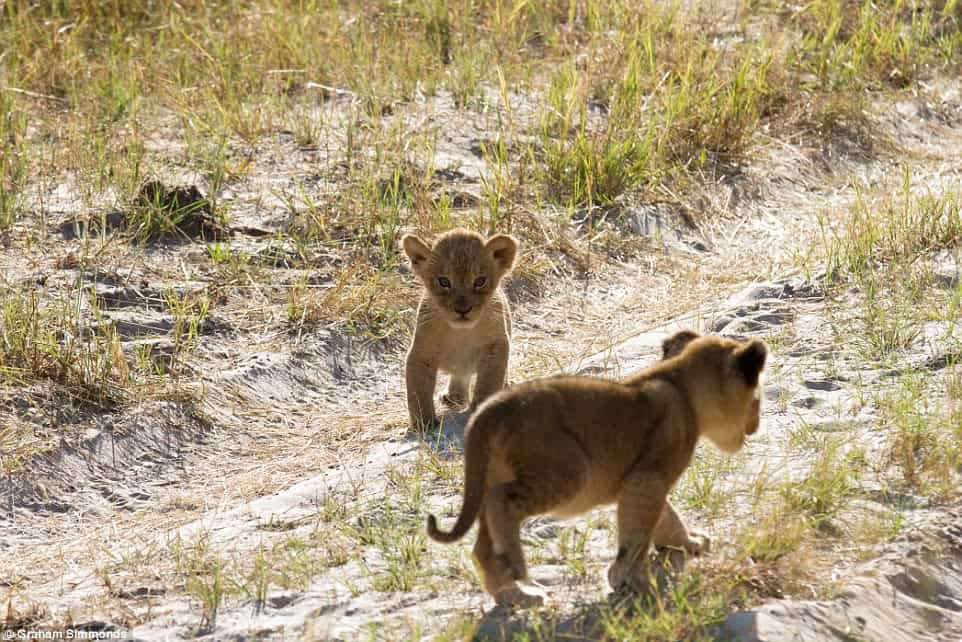
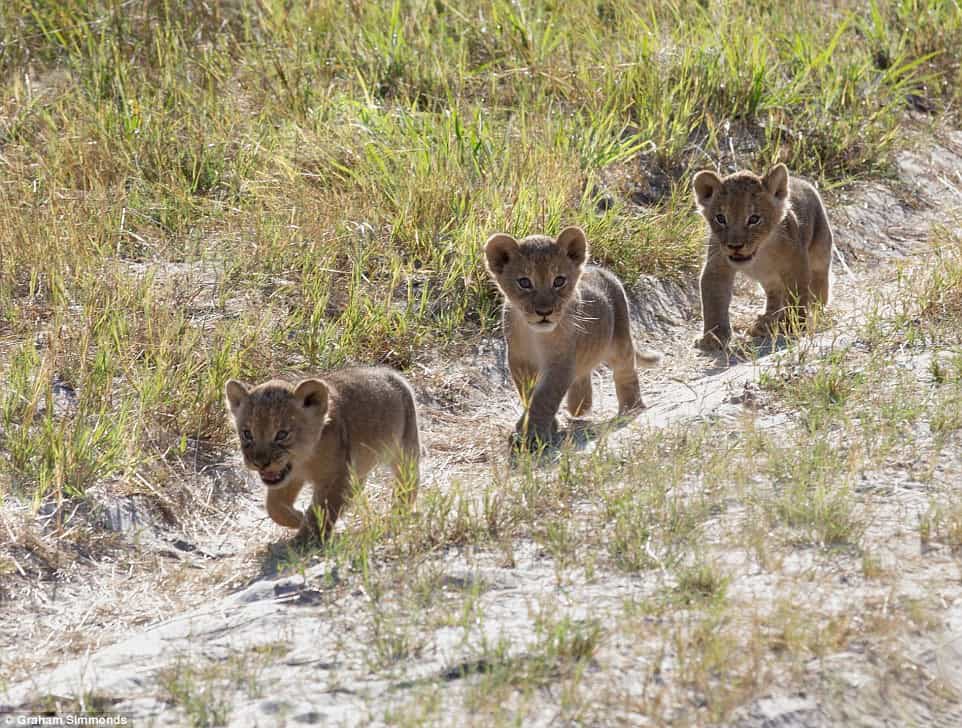
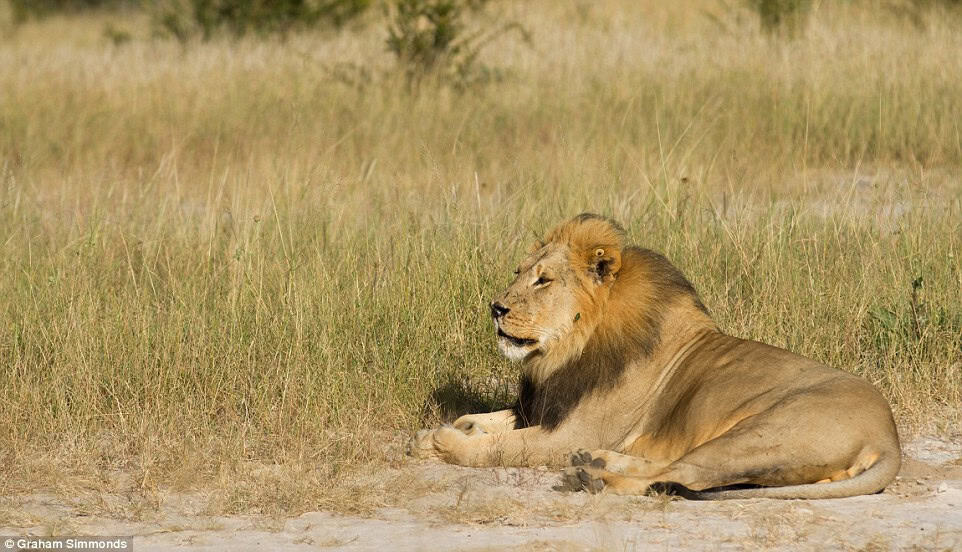
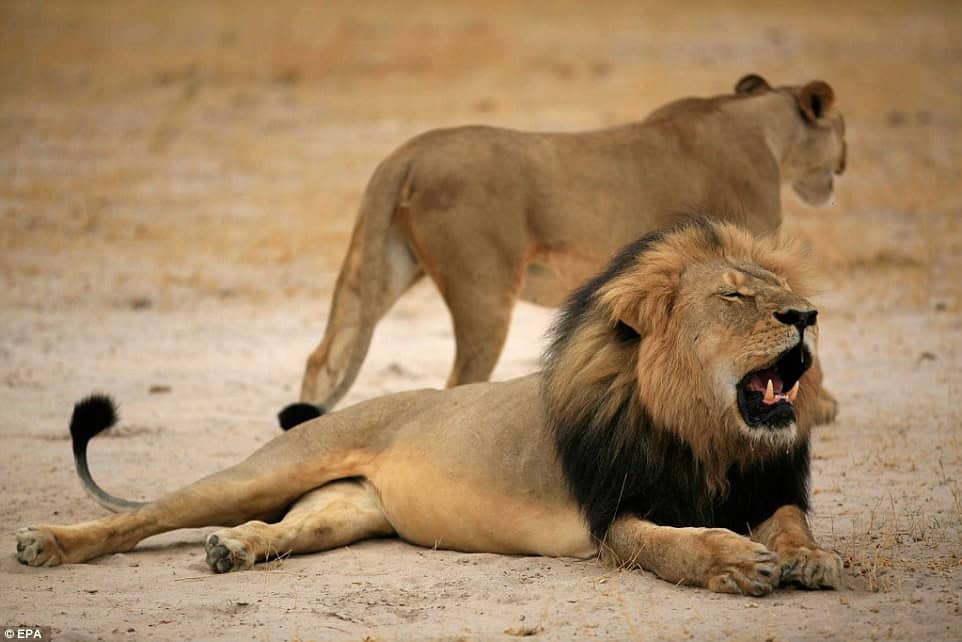
Cecil Lion’s legacy continues with the birth of his “grand cubs,” seen following their mother through the same Zimbabwean bush where an American trophy hunter killed their famous grandfather.
The cubs, offspring of Cecil’s son Xanda, were spotted within Hwange National Park, a 14,000-square-mile wildlife reserve.
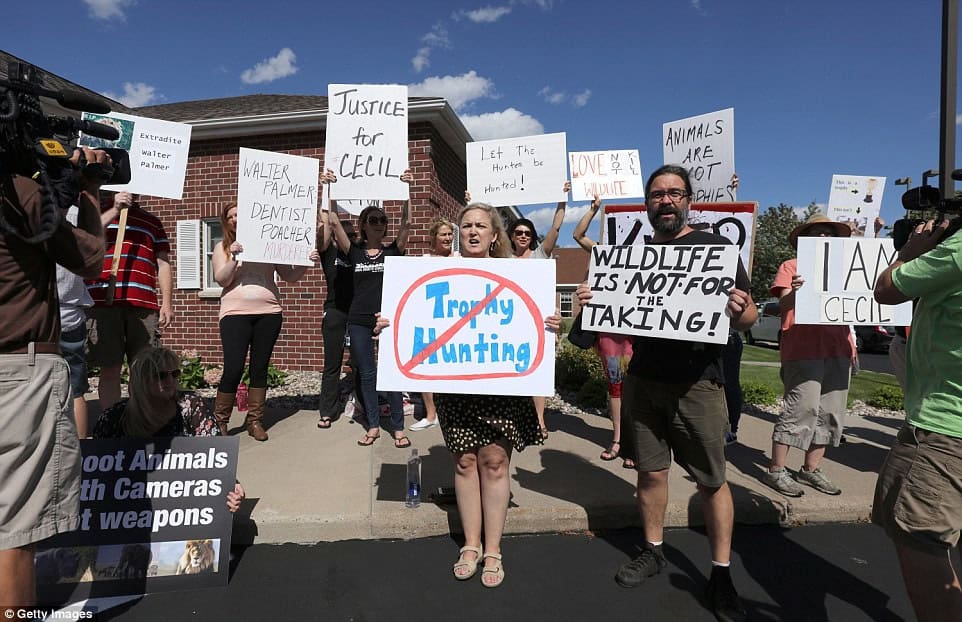
The birth of the cubs brought joy to the park staff, still affected by Cecil’s death in 2015 at the hands of Minnesota dentist Walter Palmer.
Palmer paid £46,450 for a hunting permit, not knowing the lion he killed was part of an Oxford University research project. Palmer later said he would not have shot Cecil had he known of his significance.
Cecil’s death, which occurred when the 12-year-old lion wandered outside the park’s protective boundaries, sparked international outrage.
Unlike Cecil, these new cubs are staying safely within the park. After tracking lion prints, Safari operator Graham Simmonds and his guide, Buli, came across the cubs. The pair had almost given up when, by chance, they saw two lionesses.
With sharp eyes, Buli noticed something extraordinary—10 small cubs trailing behind one of the lionesses.
“It was a special moment to witness the lioness moving her cubs to a new den,” said Simmonds, noting that the cubs belong to the Ngamo Pride, fathered by Xanda, one of Cecil’s surviving sons.
Simmonds, who works with Wilderness Safari in Linkwasha Camp, shared that Xanda had recently been seen chasing off two male lions, much like his father once did, even when outnumbered.
The cubs come from two mothers, as both lionesses had mated with Xanda the previous year. In a show of communal care, the cubs nurse from both lionesses.
David Macdonald from Oxford University’s lion research project in Hwange confirmed Xanda’s role as the cubs’ father.
Macdonald noted that Xanda was the dominant male in the Backpan Pride, where the cubs were born.
The lion research team used the distinct whisker patterns on Xanda’s face to identify him, linking him directly to Cecil’s bloodline.
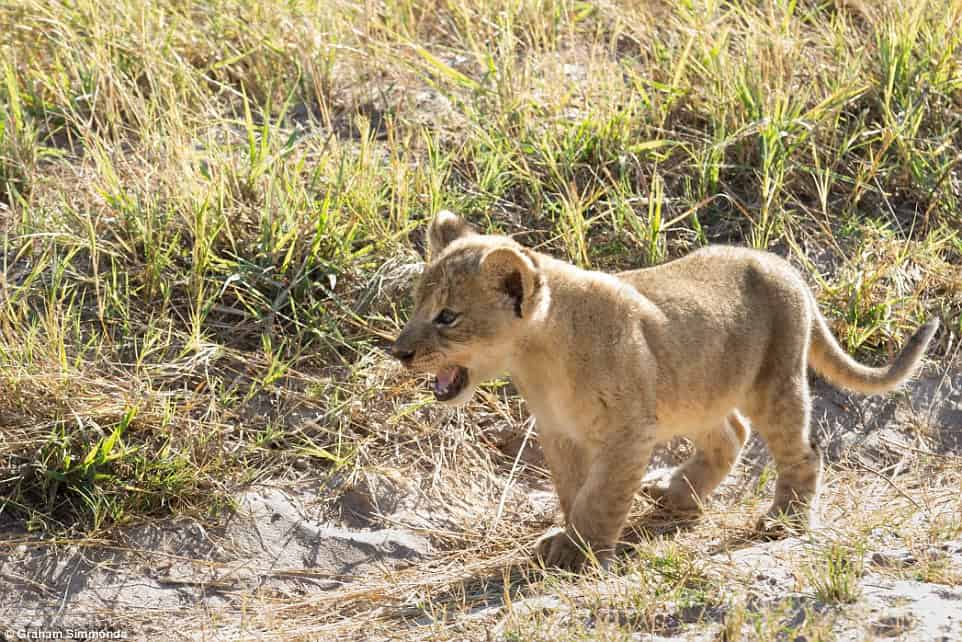
These cubs represent the next generation of a famous lineage and offer hope for the continued conservation efforts within Hwange National Park.
Read more Wildlife News.