
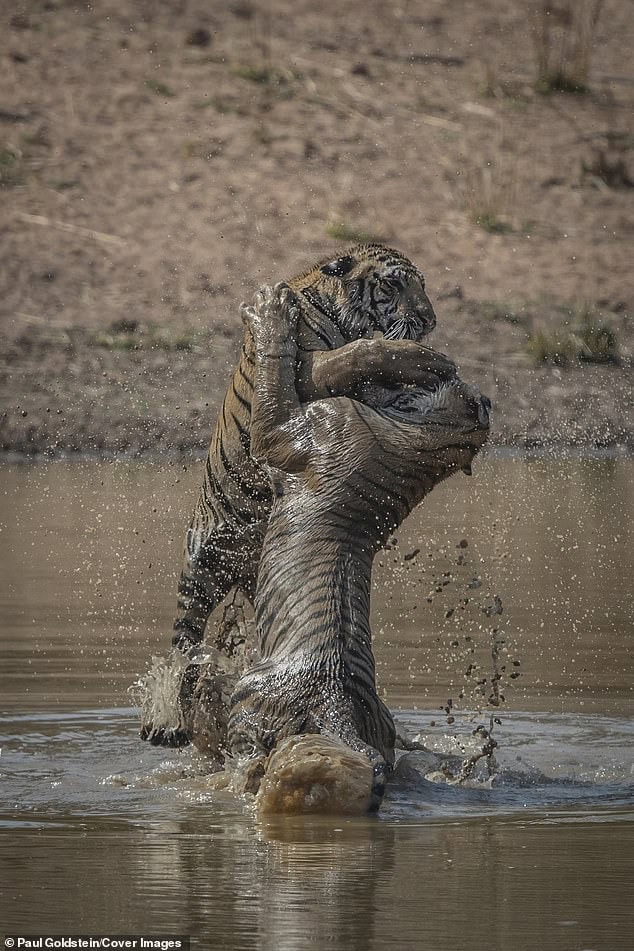
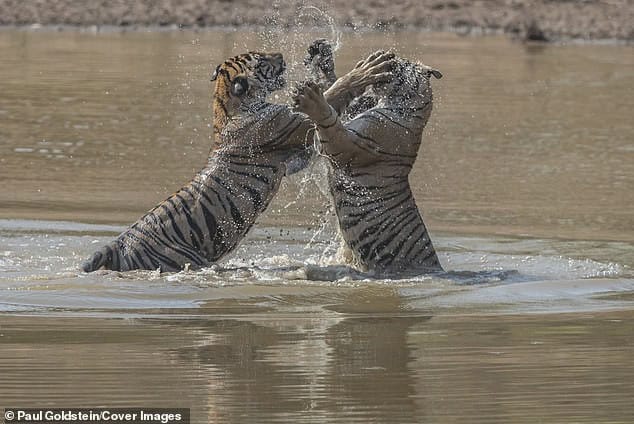
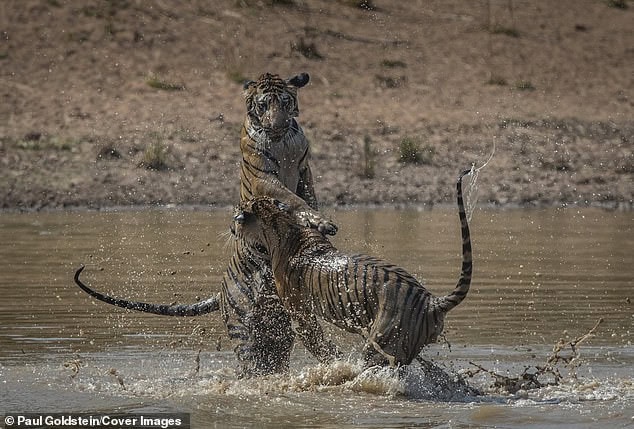
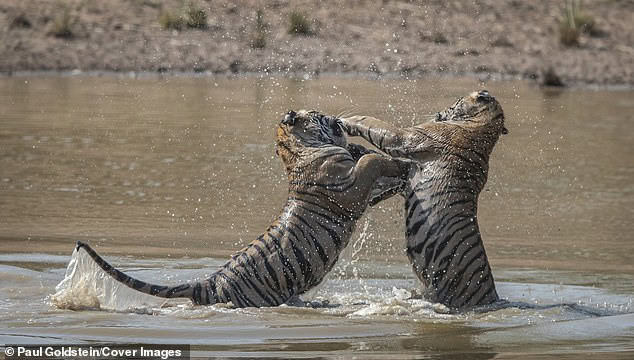
Three young tiger brothers turned their daily swim into a lively play session at Bandhavgarh National Park in central India.
The 11-month-old Bengal tigers, trying to escape the 40°C heat, were filmed splashing around and playfully pawing at each other in a pool, providing a rare sight for onlookers.
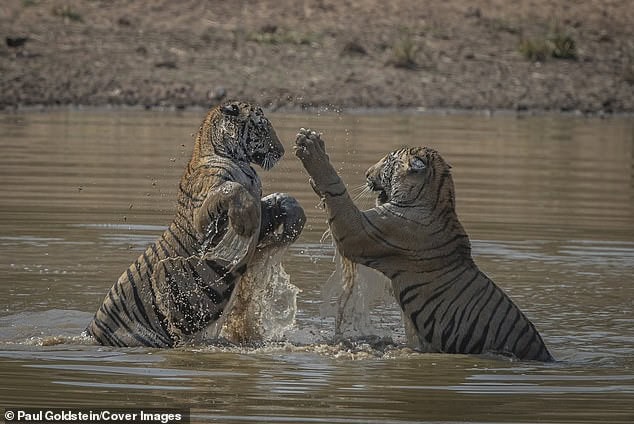
Wildlife photographer Paul Goldstein, who captured the moment during a guided tour, said the tigers’ antics were thrilling.
Bengal tigers are considered endangered, with fewer than 1,800 left in the wild, according to the International Union for Conservation of Nature (IUCN). The tiger trio is seen playfully wrestling in the water in the video.
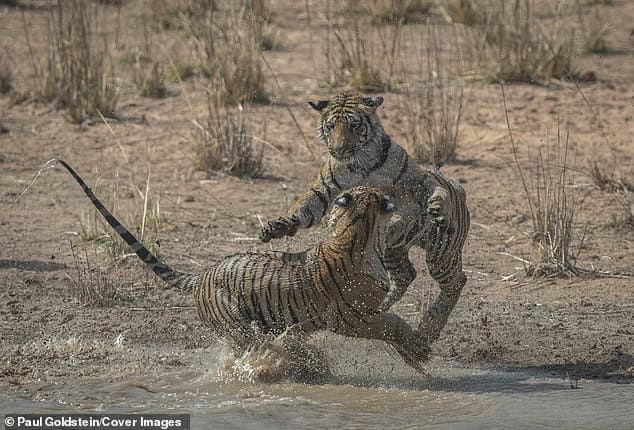
One of the cubs settles for a nap at one point before another brother chases him out of the pool. Their playful tussling in the water mimics the hunting skills they will need as they grow older.
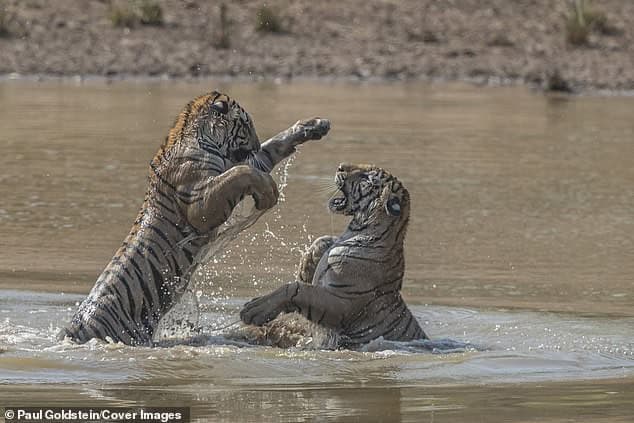
Paul, based in Wimbledon and a tour leader for Exodus Travels, shared his excitement: “I’ve waited two decades to witness a scene like this. These young tigers fought in the water for thirty minutes, honing essential skills for their future.” While their actions are crucial for survival, Paul joked that some of the splashing seemed like pure fun.
He added that the joy of seeing such moments with wildlife enthusiasts made the experience unforgettable.
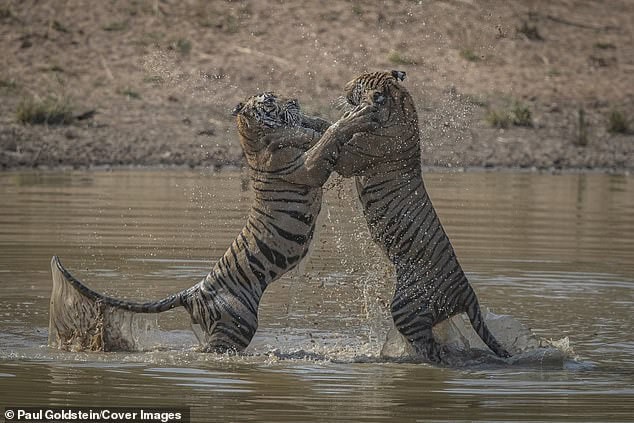
These tiger cubs belong to a tigress named Dotty; they are her first litter. While the Bengal tiger population in India showed some recovery between 2006 and 2010, they remain endangered due to threats such as poaching and habitat loss.
Their skins and body parts are highly valued in the illegal wildlife trade, especially in traditional Chinese medicine, which lacks scientific backing.
To support the conservation of these majestic creatures, Paul has raised $200,000 for Bandhavgarh National Park through personal challenges, including climbing Mount Kilimanjaro and running near the Taj Mahal.
His efforts don’t stop there—he plans to run the London Marathon next year as part of his “Worth More Alive” campaign to raise further awareness about the importance of protecting tigers.
“A tigress like Dotty is far more valuable alive,” Paul said. “While her body parts might fetch $30,000 on the black market, alive, she contributes to the local economy and ecosystem, potentially generating $50 million over her lifetime.”
Paul also criticized the destructive impact of traditional Chinese medicine on endangered species like tigers and rhinos.
“It’s disheartening to see the continued demand for these animals, driven by baseless medicinal practices. However, seeing thriving reserves like Bandhavgarh gives hope that we can still protect them.”
Read more Wildlife News.