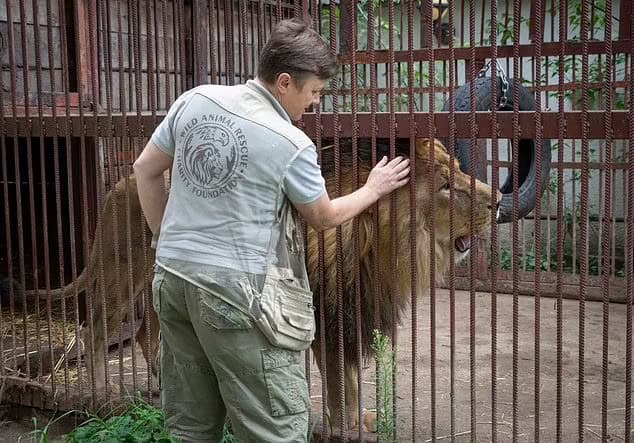
CHUBYNSKE, Ukraine (AP) — Natalia Popova has dedicated herself to rescuing wild animals and pets from the destruction caused by the war in Ukraine.
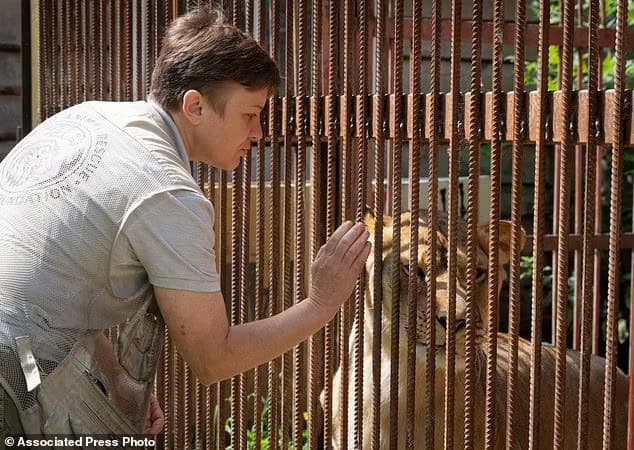
“They are my life,” says the 50-year-old as she lovingly strokes a light-furred lioness. The lioness responds like a kitten, lying on her back and stretching her paws toward Popova.
In partnership with the animal protection organization UA Animals, Popova has rescued over 300 animals.
Two hundred have been relocated abroad, and 100 have found homes in western Ukraine, a region considered to be safer.
Many of these animals were previously kept as pets in private homes, abandoned when their owners fled from Russian shelling.
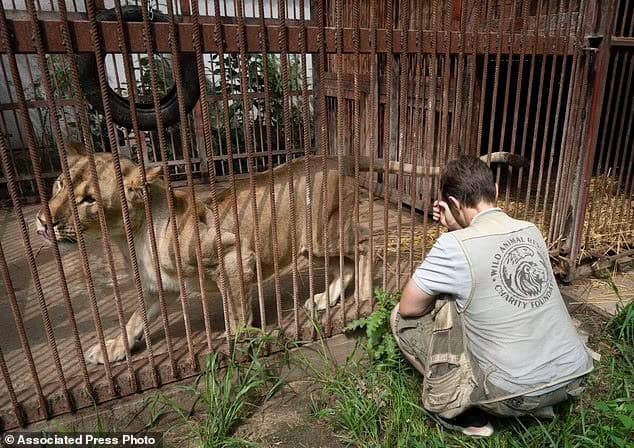
Currently, Popova’s shelter in the village of Chubynske, near Kyiv, is home to 133 animals, including 13 lions, a leopard, a tiger, wolves, raccoons, foxes, and deer, as well as domesticated animals such as horses, donkeys, dogs, cats, and rabbits.
Some of these animals, awaiting evacuation to Poland, were rescued from heavily bombed areas in Kharkiv and Donetsk.
Ukrainian soldiers, who notify her when animals near the front lines need saving, often joke that Popova seems to have as many lives as a cat.
“No one else dares to go there. Everyone is afraid. I’m scared too, but I still go,” she says. Popova often feels terrified on these rescue missions but persists nonetheless.
“I feel so sorry for the animals. They’re stressed because of the war, and no one else is there to help them,” she explains.
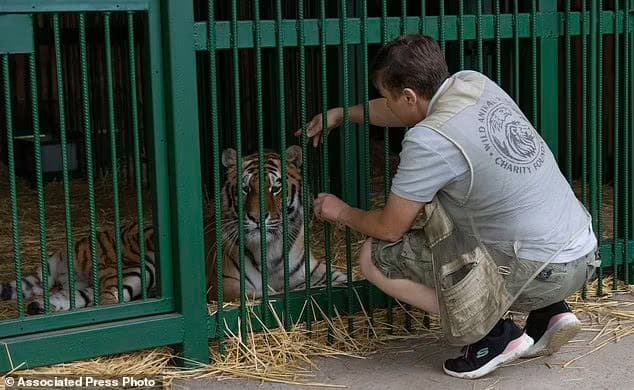
Popova usually knows little about the animals she rescues—she doesn’t know their names, ages, or even their owners. “They don’t introduce themselves when they arrive,” she jokes.
Initially, Popova made these dangerous trips alone, but she now receives help from a couple associated with UA Animals.
One of their fastest rescues was evacuating a lion in just 16 minutes between Kramatorsk and Sloviansk.
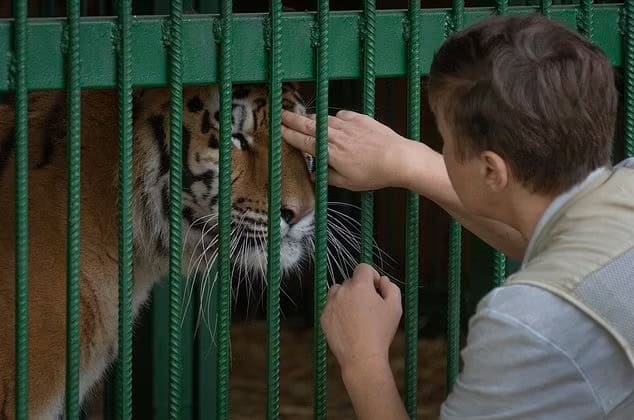
Despite having no veterinary training—her background is in economics—Popova administered anesthesia to the lion to sedate it for transport.
Popova’s attachment to animals goes back to her childhood. She recalls building homes for worms and talking to birds.
In 1999, she founded Ukraine’s first private horse club, but it wasn’t until four years ago that she rescued her first lion.
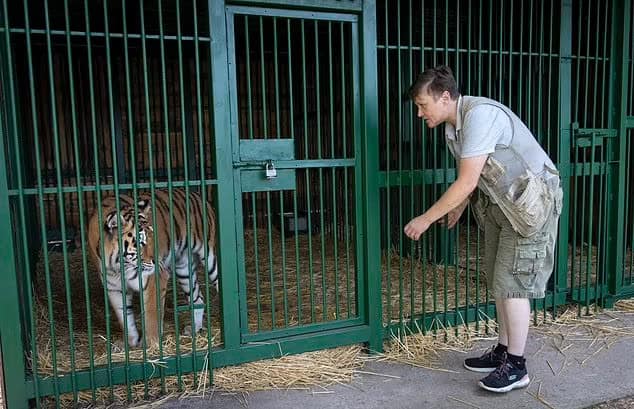
A group against slaughterhouses reached out to her about a lion with a broken spine, and despite her lack of experience with big cats, Popova couldn’t resist helping. After building an enclosure, she bought the lion from its owner.
She later created a social media page called “Help the Lioness,” and soon people began contacting her to rescue other wild animals.
Her first rescue, a lioness named Yana, became a permanent part of her life due to a disability that prevented her from finding a new home. Popova cared for her until Yana passed away two weeks ago.
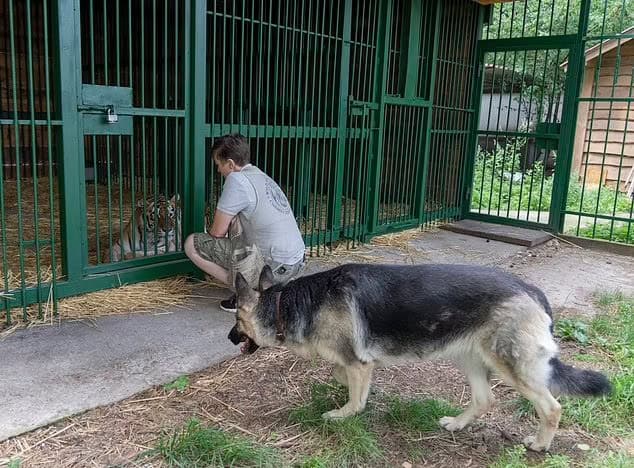
While the shelter provides temporary refuge, Popova rehabilitates the animals and finds new homes.
Though she feels a deep bond with the big cats, she recognizes that she doesn’t have the resources to give them the lives they deserve.
“I love them, but I know they need more than I can provide,” she says.
Initially, Popova funded the shelter through her horse business, but the war has left that venture struggling.
With monthly costs of over $14,000 to care for the animals, she has been forced to borrow money, and her debt has now reached $200,000.
Although she receives some support from UA Animals and donations, she worries constantly about finances.
Despite the challenges, Popova remains committed. “I’ll keep borrowing and going to war zones to save animals. I can’t say no,” she says.
Many of the animals rescued by Popova are sent to the Poznań Zoo in Poland, which helps find them new homes.
Some have already been relocated to Spain, France, and South Africa. Her next mission is to transport 12 lions to Poland.
With no end to the war, Popova knows her work isn’t over.
“My mission in this war is to save wild animals,” she says.
Read more Wildlife News.