
The Song Thrush is a bird known for its beautiful singing, admired by bird watchers and nature lovers. Though small, it stands out for its charming melodies, making it a well-loved symbol of nature’s musical brilliance.
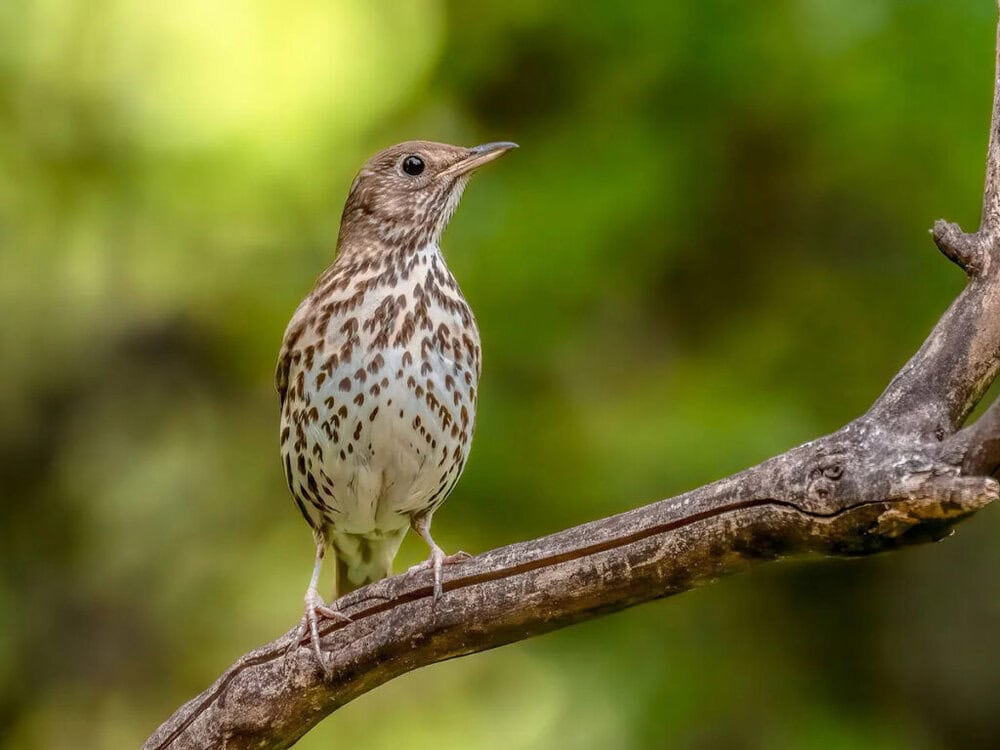
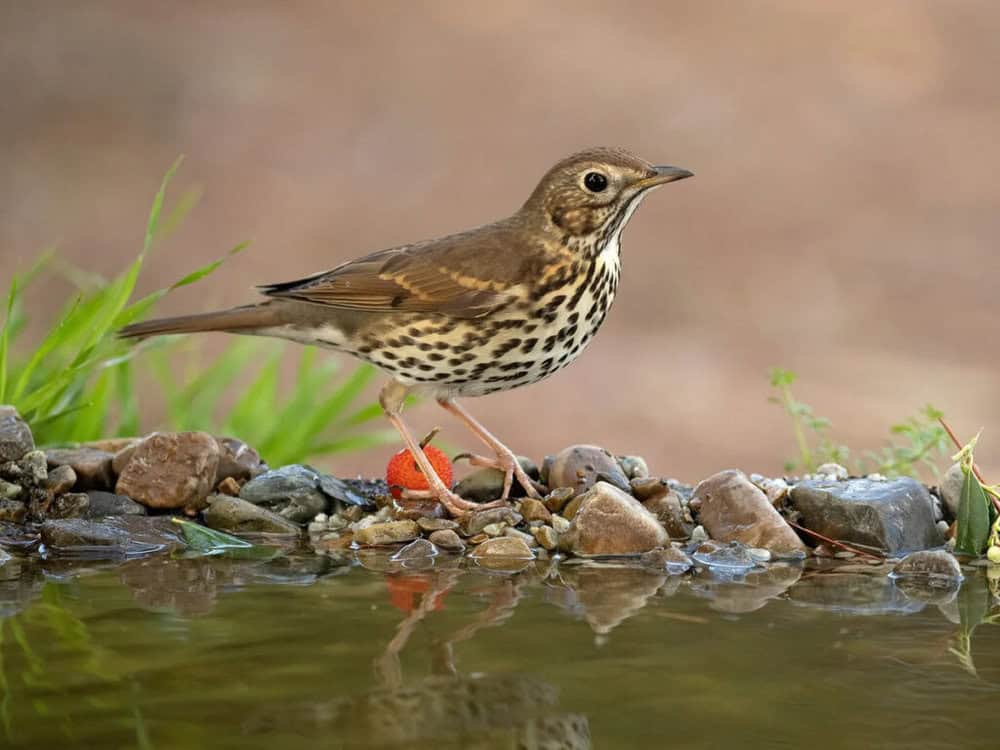
Though similar in size to the Blackbird, the Song Thrush has distinct features. Its brown upper body and cream-colored underside are patterned with black triangular spots. Pinkish legs, large dark eyes, and a straight bill (dark on top and yellowish underneath) give the bird an elegant look.
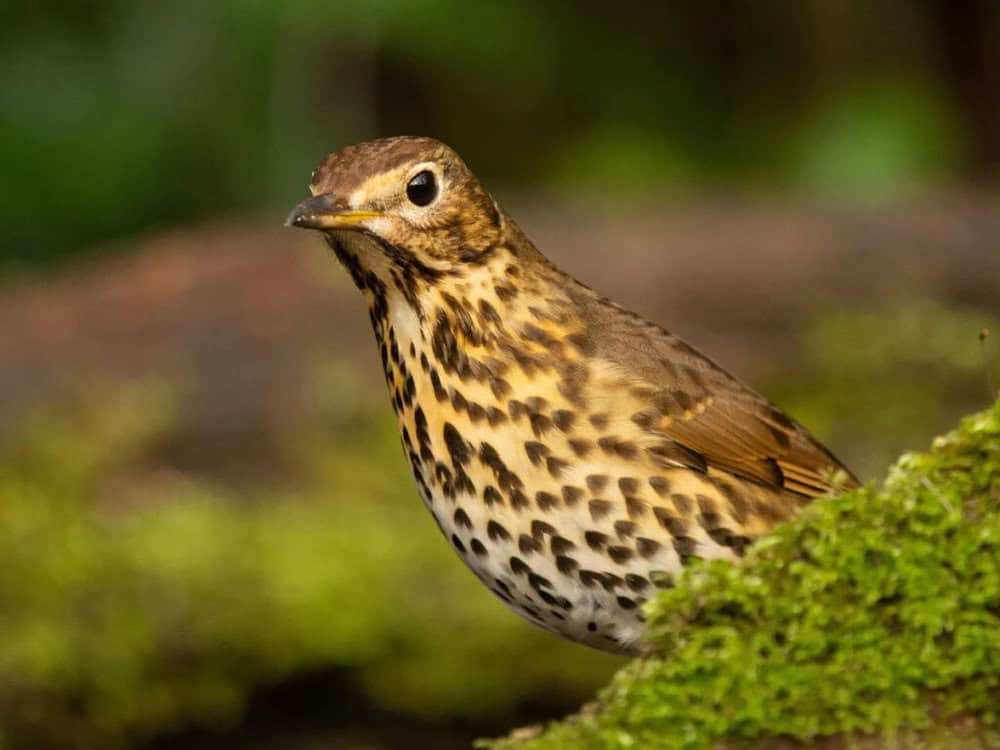
Adult males and females are nearly identical, but juveniles can be recognized by the streaks on their heads and backs, often in shades of orange and buff.
This medium-sized bird, it’s about 20 to 23 centimeters and weighing 50 to 107 grams, can often be found in gardens and woodlands. However, it is its song that truly sets it apart.
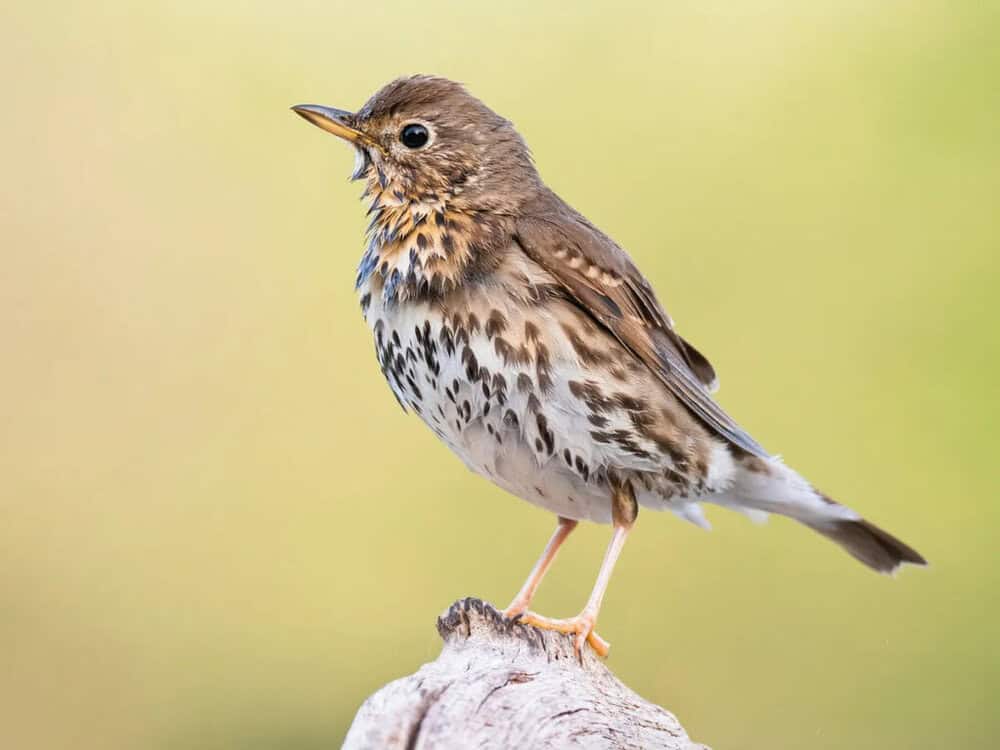
The male sings at dawn and dusk, repeating short musical phrases multiple times. Its repertoire also includes calls used to warn of danger or express excitement.
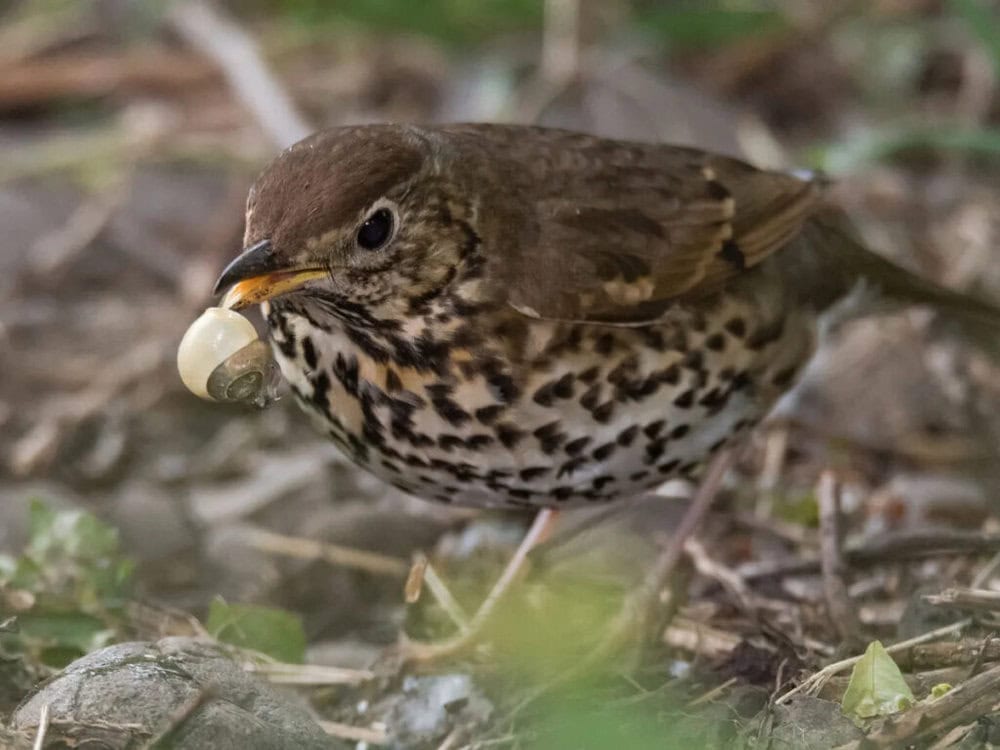
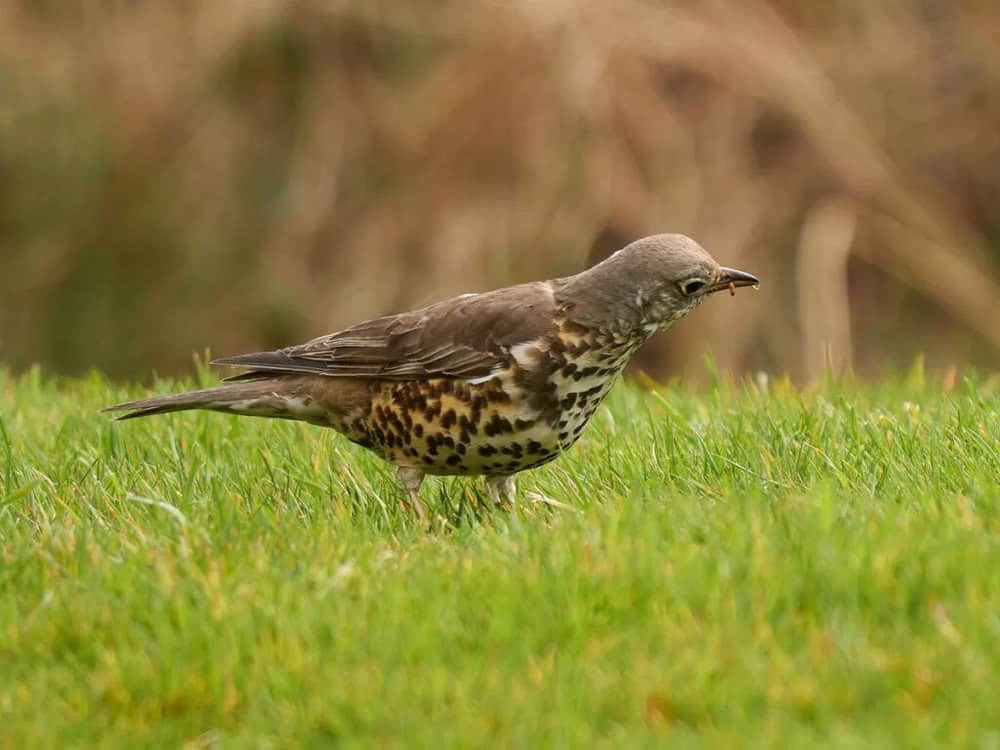
The Song Thrush has a varied diet. It mainly feeds on insects, worms, and caterpillars but is known for its unique method of eating snails, using hard surfaces to crack open their shells. As seasons change, the bird turns to fruits and berries when insects are harder to find.
Both Song Thrush parents take part in raising their young, feeding the chicks, insects and small invertebrates. Fledglings leave the nest after two weeks but continue to receive parental care for up to three more weeks.
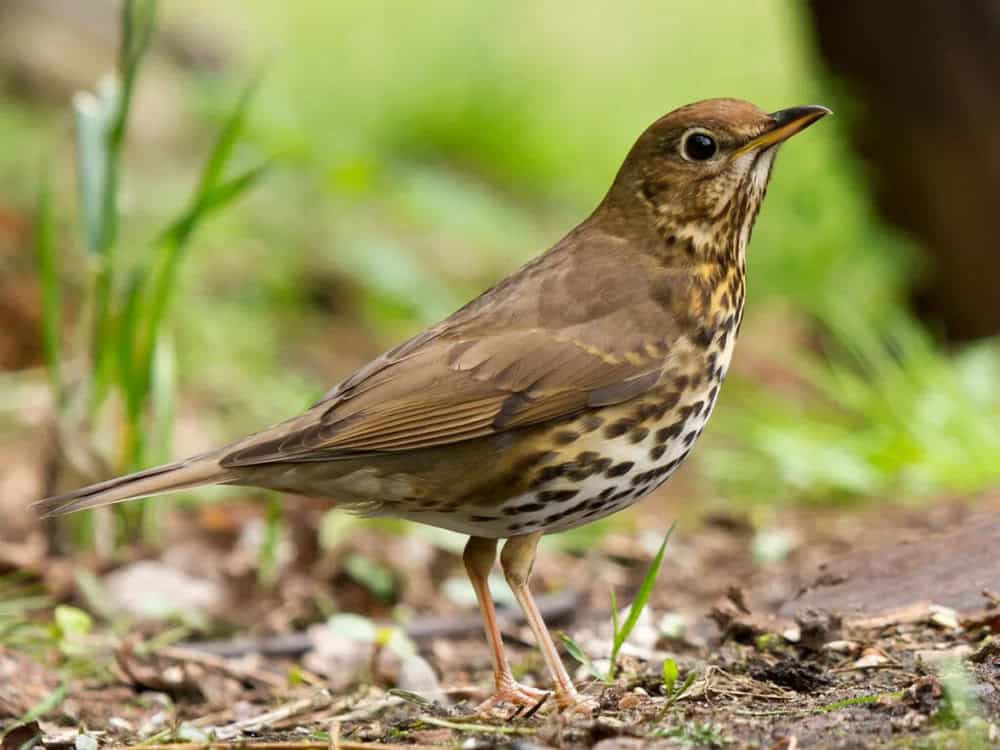
The Song Thrush is often spotted in woodlands, parks, and gardens. Though once common, its numbers have decreased due to habitat loss, making conservation efforts important.
Despite the challenges, the species has adapted to various environments, thriving in New Zealand and Southeast Australia.
Though solitary and somewhat shy, the Song Thrush is occasionally seen foraging on the ground, hunting for food in short bursts. Its flight is fast and slightly jerky, and it often sings from high, exposed perches in trees.
On average, a Song Thrush lives for about three years, though some have been known to survive up to 14 years. Common predators include domestic cats and Sparrowhawks.
In the UK, the species is legally protected under the Wildlife and Countryside Act of 1981 and is listed under the Amber conservation status due to its population decline.
The Song Thrush builds intricate nests using materials like moss, twigs, mud, or clay. The nests hold three to five blue or blue-green eggs, about 27 millimeters long and 20 millimeters wide. These birds are typically monogamous during the breeding season and may reunite with the same partner each year.
As the seasons change, so do the migratory habits of the Song Thrush. Some travel far, even reaching Northern Mongolia. Despite its challenges, this adaptability and resilience have helped the species maintain a “Least Concern” status globally.
The Song Thrush is a testament to nature’s beauty, with its captivating song reminding us of the delicate balance of life. Even in changing landscapes, this small bird sings, inviting us to appreciate its place in the natural world.


Read More Birds
