
The Snow Bunting is a distinct bird with a stocky build and a short, conical bill. One of its most striking features is its changing plumage, adapting to different seasons. In winter, it often wears rusty-colored feathers. However, its white wings with black tips and outer tail feathers create a signature look during flight.
In winter, male Snow Buntings become even more striking, contrasting their white bodies against black backs and wings. Their appearance shifts throughout the year, as brown accents appear on their chest, face, crown, and nape during colder months.

Females go through a similar seasonal transformation. During the winter, rusty brown tones appear on their back, head, and breast, softening their typical black-and-white pattern. Even their bills change color, from black in the breeding season to a warm yellow-brown in winter.
Young Snow Buntings, seen from July to September, have greyish feathers and pale bellies before maturing into their adult plumage. Their duller appearance gradually gives way to the vibrant colors of their adult form.

Snow Buntings also have a unique call—a warbled song filled with whistles, buzzing, and rolling notes that echo through their Arctic habitats. Their vocalizations are heard both in flight and during quiet moments.
When it comes to food, Snow Buntings primarily eat seeds, sometimes seeking out buds and small invertebrates. They often shake or bend plant stalks to access seeds and forage on sandy beaches for invertebrates.
Living in the Arctic and other open habitats, Snow Buntings make their homes in diverse places like beaches, lake shores, fields, and farmlands across the Northern Hemisphere. Their range extends from Alaska to Russia, Canada, and Iceland.
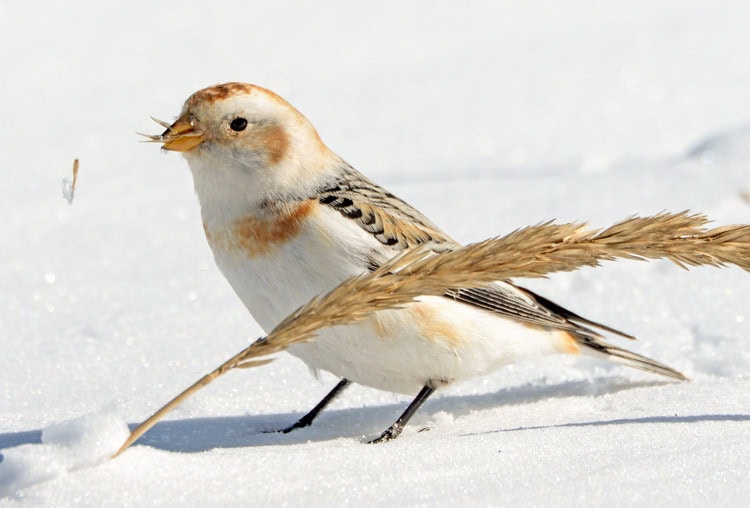
Though these birds are most commonly found on snowy ground, they can be seen in various places, including agricultural fields and coastal sand dunes. Their ability to adapt to fluctuating conditions is a key part of their survival.
Snow Buntings lead lives of contrast, nesting in the cold Arctic and migrating to more temperate climates for winter. While breeding, they defend their territories and ward off predators, but they become more sociable during winter.
The Snow Bunting symbolizes the resilience and beauty of the Arctic, thriving in harsh environments. Their annual migrations from the tundra to their winter homes showcase the rhythms of nature, and their presence is a reminder of how adaptation allows life to flourish in even the most challenging landscapes.
Read More Birds
